ResMed, Cardiac Monitors & Emergency Supplies: A Buyer's FAQ
· Elena Varga
-
When the Clock Is Ticking: A Medical Equipment Buyer's FAQ
-
1. Is the rush fee worth it, any time?
-
2. What should I know about the ResMed F20 CPAP mask?
-
3. Should I shop ResMed directly or use a distributor?
-
4. What is a manual resuscitator and why should I stock them?
-
5. What can a cardiac monitor tell me—and what can't it?
-
6. What is coagulation testing and why should an equipment buyer care?
-
7. What hidden costs should I budget for?
-
Final thought
-
1. Is the rush fee worth it, any time?
When the Clock Is Ticking: A Medical Equipment Buyer's FAQ
I'm not going to open with a warm, fuzzy story about saving lives. My job is less glamorous: buying medical equipment for a health system. Sleep labs call at 2 p.m. needing a CPAP setup by 7 a.m. The ED needs a cardiac monitor before an unannounced survey. I've handled 200+ rush orders in the last decade, including one 2024 delivery that arrived at 12:30 a.m. with 90 minutes to spare. Some went smoothly. A few almost broke me.
Here's the FAQ I wish I'd read before my first emergency order.
1. Is the rush fee worth it, any time?
Not always. If a supplier says "rush" simply because they want a premium, that's on them. But when the fee buys certainty—a real, committed delivery window—then yes, I'd argue it's worth every dollar.
I didn't always believe that. I used to think rush fees were a racket. Then in March 2024, we had a $48,000 contract hinging on a CPAP shipment. A discount vendor said "probably Thursday." It didn't arrive Thursday. We scrambled, paid a local supplier double for same-day delivery, and recovered. But the lesson stuck: the cheap option became the expensive one.
Rush fees buy certainty, not just speed. Certainty is what keeps a hospital running.
2. What should I know about the ResMed F20 CPAP mask?
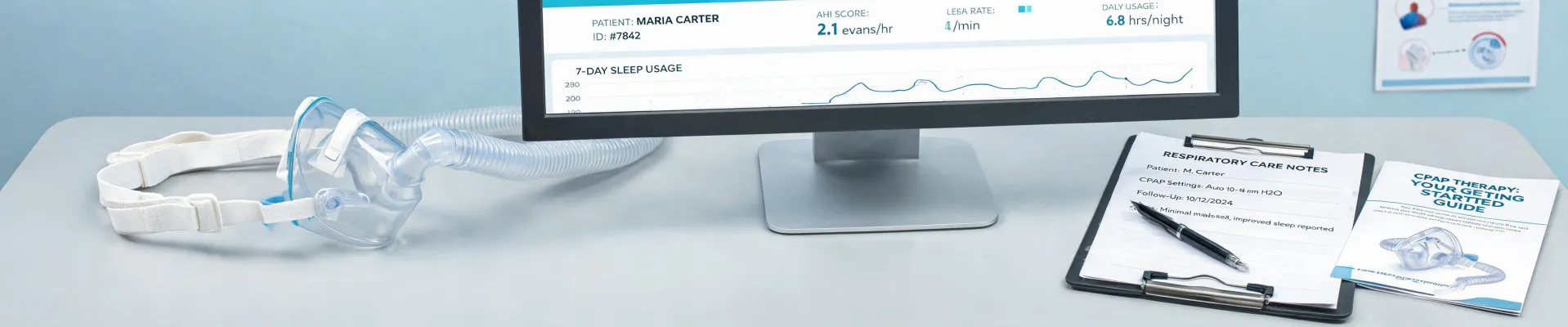
The ResMed F20 is a full-face mask (covering both mouth and nose) and one of the most commonly requested CPAP masks we stock. It comes in four sizes, and you can choose between a standard silicone cushion or the AirTouch foam cushion. Foam is more comfortable for many patients; silicone lasts longer. For emergency stock, I prefer silicone because it's less finicky.
The biggest pitfall in an urgent order is sizing. The right size for one patient isn't the right size for another. So we keep multiple sizes on hand. The second pitfall is cushion compatibility—not every F20 cushion fits every F20 frame. Check the ResMed official spec sheet (resmed.com) before you assume.
(Note to self: actually document the cushion-frame matrix for our inventory. I keep saying I'll do that.)
3. Should I shop ResMed directly or use a distributor?
For routine replenishment, buying through shop.resmed.com makes sense. You get official warranty support, the ordering process is clean, and you know exactly what you're getting. For planned orders, that's what I recommend.
But in a true emergency? The online order path isn't always fastest. Web orders go into a fulfillment queue that runs on the manufacturer's schedule, not yours. That's when a local or regional distributor is worth their weight in gold. They have stock in a warehouse, and—more importantly—they answer the phone and can arrange same-day pickup.
In Q1 2024, I quoted the exact same CPAP configuration from four distributors. Pricing varied by nearly 40%, and only one could commit to an urgent delivery window. Guess which one we use now.
4. What is a manual resuscitator and why should I stock them?
A manual resuscitator is a handheld device—often called a bag-valve mask or "Ambu bag"—that lets a clinician manually pump air into a patient's lungs by squeezing a bag. It's a basic but critical tool when a patient can't breathe on their own.
You'll need it when a ventilator fails, when a patient is being transported between units, or while waiting for intubation in the ED. It's not a substitute for a ventilator, but it's a bridge, and bridges matter.
What to check before buying: transparent mask (so you can see the patient's lips/color), oxygen reservoir bag, and standard 15mm/22mm connections. And whatever you do, check the expiration dates. We once found a "backup" resuscitator in a crash cart with cracked rubber. Nobody wants that surprise in a code.
5. What can a cardiac monitor tell me—and what can't it?
A cardiac monitor (the bedside device that continuously displays ECG, heart rate, SpO₂, and blood pressure) is essential in acute care. It's a great early warning tool. What it is not, is a diagnostician.
A monitor can show you a rhythm change. It can't tell you why the patient is deteriorating, whether they're in pain, or if the family is hiding something important. It also can't tell you a patient is stable—I've seen normal vitals on the screen while the patient clearly looked awful.
For procurement, that means: don't pay for advanced parameters (e.g., invasive BP, cardiac output) unless your clinical team will actually use them. Otherwise, you're buying an expensive paperweight.
6. What is coagulation testing and why should an equipment buyer care?
Coagulation testing refers to lab tests that evaluate how well a patient's blood forms clots. Common examples include PT/INR, APTT, and fibrinogen levels. These matter in trauma, major surgery, and liver disease—basically, any situation where bleeding risk is high.
Why should a buyer care? Because point-of-care (POC) coagulation analyzers now exist. They give results in minutes at the bedside, instead of the classic 2-hour turnaround from the central lab. For a trauma center or an ED that manages patients on blood thinners (in other words, most EDs), that speed can change a clinical decision.
We added a POC coagulation device to our capital budget after exactly one bad experience with a delayed lab result. One was enough.
7. What hidden costs should I budget for?
Here's the list I wish someone had handed me ten years ago:
- Training: Every new device requires staff time to learn it. That's hours of paid clinical time.
- Consumables: CPAP cushions, ECG electrodes, SpO₂ probes, and coagulation test cartridges. Some of these cost more than you'd think.
- Service agreements: Monitors and ventilators need regular calibration and maintenance. Skip the contract and you'll regret it when the device fails.
- Batteries: Transport monitors need spare batteries. Replacement batteries are surprisingly expensive.
These add up fast—in my experience, total cost of ownership often exceeds the purchase price by 30-50% or more in the first year. Budget for that, not just the sticker price.
Final thought
In emergency medical equipment buying, the most expensive option is usually the one that isn't there when you need it. I've learned to pay for certainty—through reliable distributors, backup inventory, and service contracts. It's not the cheapest way to run a supply chain. But it's the way that lets you sleep at night (yes, I have learned that the hard way).

Elena Varga
Elena Varga is a medical imaging systems analyst covering CT scanners, MRI systems, ultrasound platforms, digital radiography, mammography, and ophthalmic imaging equipment. She references IEC 60601-2-44 for CT safety and essential performance while examining CTDIvol, dose-length product, spatial resolution, slice thickness, field uniformity, throughput, uptime, and DICOM interoperability. Her work helps radiology leaders, medical physicists, biomedical engineers, and procurement teams compare image quality, radiation management, workflow integration, serviceability, and lifecycle cost.