Medical Supply Orders Fail the Same Way Every Time. After 43 Mistakes, I Finally See the Pattern.
· Elena Varga
-
What the Mistake Log Actually Looks Like
-
Root Cause #1: We Compared Prices Before We Compared Fit
-
Root Cause #2: "Compatible" Is the Most Dangerous Word in Medical Supply Chains
-
Root Cause #3: Clinical Knowledge Arrives After the PO—Not Before
-
Root Cause #4: We Bought for the Spreadsheet, Not for the Patient
-
The Real Price Tag
-
The Fix Was One Question
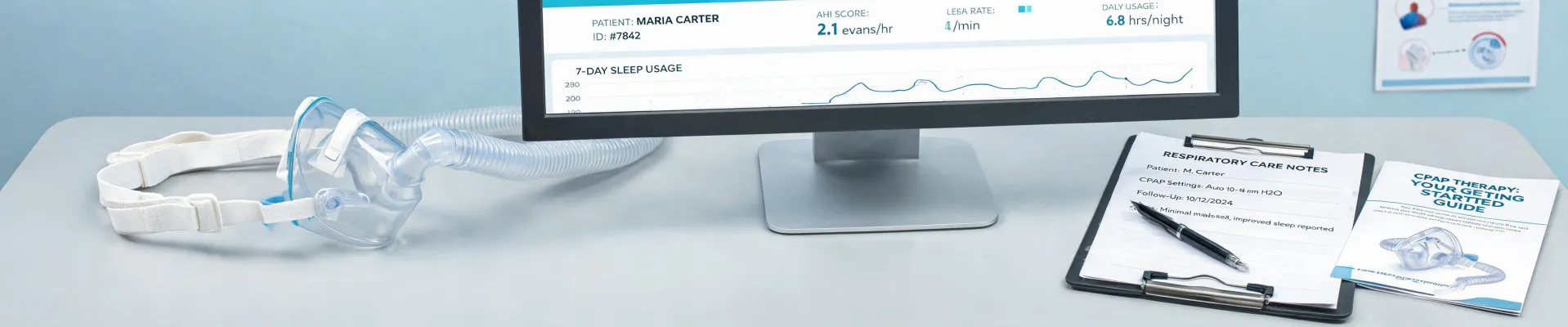
I added the 43rd entry to my procurement error log recently. A $4,800 order of ResMed AirFit F20 full-face masks arrived with the wrong size mix—mostly mediums, when our sleep clinic's patient population skewed heavily toward large. The first thing that goes through your head after a mistake like that is "how did I miss this?" The second is "I need to be more careful."
For the first couple of years, that's exactly how I filed every error in the log: my own carelessness. But last week, I finally sat down and categorized all 43 mistakes across every department we serve. The pattern did not point to me. It pointed to four system-level problems that will keep producing mistakes no matter who sits in my chair.
What the Mistake Log Actually Looks Like
Before the analysis, the tour. Because the shape of these errors matters.
- ResMed AirFit mask orders: 7 sizing errors over five years. Sometimes new patient setups, sometimes ResMed replacement masks for existing CPAP users. The model and quantity were always right. The size breakdown was always off.
- Ambulatory blood pressure monitor orders: 2 ABPM procurements with cuff size ranges that didn't match our outpatient population. One also missed the EMR integration license.
- Ostomy bag orders: 5 instances where the product category, size range, and quantity were correct on paper, but the flange sizing system was incompatible with our wound care team's patient measurement protocol.
- Lab analyzer selection: 1 mistake large enough to make the others look like rounding errors. We bought a clinical chemistry analyzer for a lab whose growth was in immunoassay testing. I'll come back to that one.
On paper, these look like "check the spec sheet more carefully" situations. I believed that for years. Here's what the deeper dig revealed.
Root Cause #1: We Compared Prices Before We Compared Fit
The ostomy bag mistake was the first crack in my assumptions. We switched to a supplier quoting 18% less per unit. Same category, same documented size range, same quantities. Everything looked identical in the comparison spreadsheet.
What didn't show up: the manufacturer's flange sizing convention was different from what our wound care nurses used in patient assessments. "Same size" meant slightly different measurements. Patients started reporting skin irritation within a few weeks. We caught it when the nurse manager walked into my office with two ostomy bags from different vendors, placed them side by side, and asked, "Do these look the same to you?" They did not. $3,900 in wasted inventory plus an emergency reorder from the original supplier at a 25% markup.
I knew I should have requested physical samples and clinical sign-off before changing suppliers. But the savings target was real, and I thought, what are the odds the sizing system actually differs? The odds were 100%.
The broader lesson: we treated a clinically-entrenched product like a commodity. When you buy office supplies, the spec sheet is the product. When you buy clinical supplies, the spec sheet is a summary at best. The actual product includes the staff's measurement training, the patient assessment protocols, and the return policy for fit failures. None of that appears in a price column.
Root Cause #2: "Compatible" Is the Most Dangerous Word in Medical Supply Chains
The second pattern involves the word "compatible." It's everywhere in medical supply catalogs, and it means less than we think.
I learned this with a purchase of third-party ResMed replacement masks. The vendor's product physically attached to the CPAP frame. It clicked on, it stayed put, and it made a good seal in the bench test. But the masks had not been validated against the clinical performance criteria of genuine ResMed AirFit masks. Our sleep lab started tracking higher leak rates and lower adherence scores among patients using them. The 20% unit savings evaporated when we had to re-fit patients with proper masks, reschedule follow-up sleep studies, and talk a frustrated patient out of abandoning CPAP entirely.
Per FTC advertising guidelines (ftc.gov), claims like "compatible" have to be substantiated. But substantiation can be as thin as a mechanical fit test. The legal bar and the clinical bar are not the same thing. What I mean is: we bought for the legal bar, and our patients paid for the gap.
Around the same period, I made the same conceptual error with an ambulatory blood pressure monitor. The vendor said the device was "ABPM-compatible with your EMR." Capital-C Compatible. Turned out that meant the data could be exported as a CSV file—not that it would sync into our cardiology module. The integration we actually needed was a $1,900-per-seat add-on.
I had two hours to make a decision before the contract deadline. In hindsight, I should have demanded the interface spec in writing. But with the cardiology director waiting on a quote, I made the call with incomplete information—the exact situation that produces this kind of error.
Root Cause #3: Clinical Knowledge Arrives After the PO—Not Before
The ABPM cuff issue made a third pattern visible: the people who understand the clinical requirements were never in the decision loop.
The standard cuff kit on that ABPM unit fits arm circumferences of 22–32 cm. Our outpatient population skews larger. The cardiology team would have flagged that in five minutes—but they weren't consulted, because I was "just replacing monitors." A pure inventory transaction, right?
Wrong. The nurse who fits ostomy bags knows exactly why one barrier style works better than another for her patients. The sleep lab supervisor can tell you the size distribution of every patient enrolled for CPAP last quarter. The lab director knows whether next year's test menu leans more toward chemistry or immunoassay. That knowledge lives in the building, and none of it reached the person writing the PO.
I count at least 20 of my 43 errors in this category. Ones where a single conversation with a clinician would have prevented the whole event.
Root Cause #4: We Bought for the Spreadsheet, Not for the Patient
My most expensive mistake combines everything above. The clinical chemistry vs immunoassay analyzer decision.
The backstory: our lab needed to replace an aging analyzer. I was asked to evaluate options. The chemistry analyzers came in significantly cheaper on both upfront cost and projected consumables. The spec sheets looked excellent—higher throughput, better precision, lower per-test cost.
What I didn't pull was the lab's actual test volume by category. If I had, I would have seen that the growth area was immunoassay-based testing: cardiac markers, thyroid panels, vitamin D, certain hormones. The chemistry platform could technically run some of those panels, but with worse turnaround times and substantially higher reagent costs per result. We saved $12,000 on the purchase and spent roughly four times that in the first year of operating inefficiency. Then we had to buy a second analyzer anyway, along with installation and training costs.
$58,000. That's the number I wrote in my error log. It's the mistake that finally forced me to change the process rather than just my own behavior.
The Real Price Tag
Direct waste across five years: roughly $86,000. Maybe $80,000—I'd need to verify the write-off codes. But the write-offs were not the most expensive part.
The patient costs are the ones I have no clean number for: rescheduled sleep studies, ostomy patients with irritated skin, ABPM results delayed by weeks, lab results held up because the analyzer lacked the right test menu. I've never seen a report that captures that, and I'm not sure one exists.
The clinical trust cost is real too. When procurement makes enough mistakes, clinicians stop following the process. They start ordering from vendors they trust, off-contract, without telling anyone. You end up with split inventory, pricing chaos, and zero leverage with any supplier. That cost compounds quietly.
The vendor relationship cost is the subtlest one. After enough returns, even decent vendors stop offering grace. "Good faith" exchanges become strict restocking policies. Lead times stretch. The 18% you saved by switching to the cheap quote gets consumed by the friction of fixing what went wrong. In my experience, the cheapest vendor and the most expensive vendor are often the same vendor, once you factor in every follow-up cost.
The Fix Was One Question
The solution wasn't a new procurement software system, or another approval layer, or a longer PO process. It was one question, asked in writing to every vendor before we talk about pricing:
"What is NOT included in your quote?"
That's the question that surfaces the software license, the calibration certificate, the size limitations, the integration requirements, the clinical validation status—everything the comparison spreadsheet cannot see. A vendor who answers it fully might end up with a higher-looking total. But that total is the real total, and it has consistently cost us less in the end. I've learned to ask "what's NOT included" before I ask "what's the price."
The rest of the pre-order checklist I built is deliberately short:
- Clinical sign-off on fit: a clinician confirms the size mix, measurement protocol, and patient population before the PO goes out.
- Compatibility defined in writing: if a vendor says "compatible," we ask them to define what they mean in the contract—not the brochure.
- Integration spelled out: exact interface, exact format, exact license costs.
- Test menu review: for any lab analyzer, the lab director signs off against current and projected test mix.
- Trial before scale: for consumables like ostomy bags or mask products, a small-volume trial order before committing to volume pricing.
In the 18 months since we implemented this, we've caught 47 potential errors before they became purchase orders. The ones that still slip through are a smaller, less predictable class of problem—the ones where nobody could have seen it coming from the paperwork. Those, I can live with.
Granted, the process now takes longer. A procurement cycle that used to take three days takes five or six, because we are waiting on clinical sign-offs and vendor clarifications. To be fair to the old system, volume is down—but the time spent on corrections, returns, and emergency reorders has dropped far more.
If you're in medical supply procurement, the next mistake you make probably won't be the one you think it is. It won't be a checkbox you forgot to tick. It will be a gap in the system—a compatibility claim you trusted, a clinical expert who wasn't consulted, a "final price" that had a second page. Ask the question before the quote. The answer costs nothing, and it will save you everything.

Elena Varga
Elena Varga is a medical imaging systems analyst covering CT scanners, MRI systems, ultrasound platforms, digital radiography, mammography, and ophthalmic imaging equipment. She references IEC 60601-2-44 for CT safety and essential performance while examining CTDIvol, dose-length product, spatial resolution, slice thickness, field uniformity, throughput, uptime, and DICOM interoperability. Her work helps radiology leaders, medical physicists, biomedical engineers, and procurement teams compare image quality, radiation management, workflow integration, serviceability, and lifecycle cost.