ResMed AirSense 11 AutoSet, CPAP Masks, and Adjacent Devices: A Scenario-Based Buying Guide for Clinics
· Elena Varga
There Is No Single 'Best' Equipment Stack for Every Clinic
I've been handling respiratory therapy equipment orders for clinics for 8 years. I've personally made (and documented) 19 significant mistakes, totaling roughly $94,000 in wasted budget. Now I maintain our team's checklist to prevent others from repeating my errors.
Here's what I wish someone had told me in 2018: the right purchase depends on your patient pathway, not on a spec sheet. A sleep center buying a ResMed AirSense 11 AutoSet CPAP machine has a different job than a dental office looking at types of orthodontic appliances or a cardiology group evaluating a wearable ECG device.
Most clinics I work with fall into one of four scenarios:
- Sleep clinic or respiratory care: core therapy is CPAP, usually with ResMed AirSense 11 AutoSet and CPAP ResMed masks.
- Physiotherapy or rehab: you may buy physiotherapy equipment, but you also need a referral path for suspected sleep apnea.
- Cardiology or remote monitoring: you need a wearable ECG device, and you need to know when to screen for OSA.
- Dental or orthodontic: you are considering types of orthodontic appliances, including oral appliances for mild OSA or CPAP intolerance.
It's tempting to think you can just compare unit prices. But identical specs from different vendors can result in wildly different clinical workflows. The invoice price is rarely the real cost.
Scenario A: Sleep Clinic or Respiratory Care
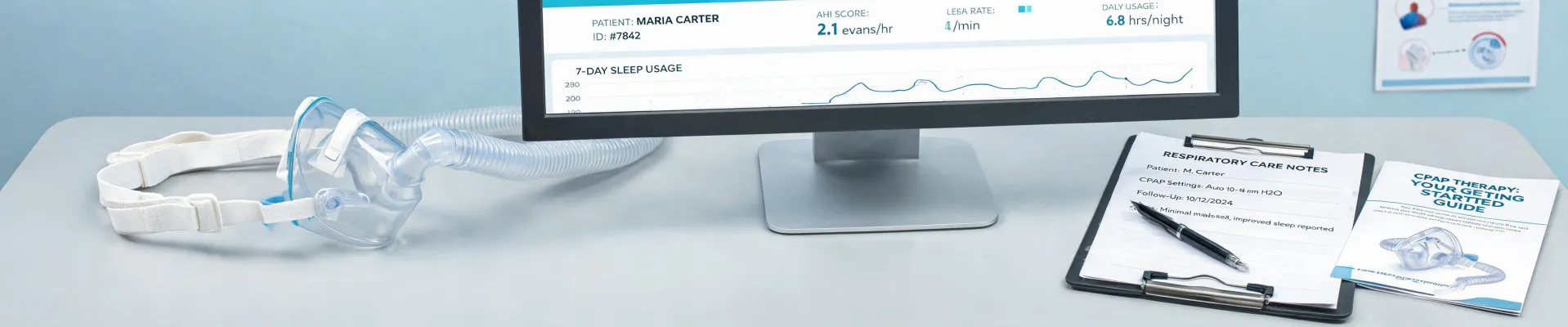
If your clinic owns the titration, adherence tracking, and mask fitting, this is the most straightforward scenario. The ResMed AirSense 11 AutoSet CPAP machine is designed for auto-adjusting pressure therapy, and ResMed publishes mask fitting guides and replacement schedules on its official site.
But the machine is only part of the order. CPAP ResMed masks are not a commodity. They are clinical interfaces. I learned that in September 2022, when I approved a 24-unit order of ResMed AirSense 11 AutoSet CPAP machines with a cheaper third-party mask bundle to save $38 per mask. The spreadsheet looked fine. Within a month, 9 patients came back with leak complaints. We spent 14 hours refitting and swapping masks. That error cost about $1,900 in returns plus clinician time. Lesson: mask fit, headgear, and cushion type drive outcomes more than the per-unit mask discount.
What to include in your transparent quote:
- ResMed AirSense 11 AutoSet machines, including humidifier chambers and filters.
- CPAP ResMed masks in the mix your patients actually need: nasal, nasal pillows, and full face.
- Headgear, cushions, tubes, and replacement schedule for 12 months.
- myAir or AirView setup, data access, and staff training.
- Shipping, warranty terms, and who handles returns.
I've learned to ask 'what's NOT included' before 'what's the price.' A quote that hides mask replacement or software access is not cheaper. It's just delayed.
Scenario B: Physiotherapy or Rehab Clinic
This scenario is where I see the most category confusion. Physiotherapy equipment is for mobility, pain, neuromuscular re-education, and rehab. It is not a treatment for obstructive sleep apnea. If you buy physiotherapy equipment and a patient mentions snoring, witnessed apneas, or daytime sleepiness, your job is to screen and refer, not to treat.
We once bought a physiotherapy equipment package with EMG biofeedback and assumed the data would export into our sleep workflow. It did not. The integration work cost $2,300 and two weeks of IT time. So before you sign, ask: does this device need to talk to our sleep data? If yes, confirm the export format and whether it works with ResMed AirView or your EMR.
The safe play: keep physiotherapy equipment and sleep therapy separate in your budget, but connected in your referral pathway. If your rehab patients have untreated OSA, their fatigue and recovery will lag. A ResMed AirSense 11 AutoSet and the right CPAP ResMed mask may be appropriate after a sleep physician evaluates them. But that is a separate clinical decision.
Scenario C: Cardiology or Remote Monitoring with a Wearable ECG Device
A wearable ECG device is for rhythm. It detects atrial fibrillation, bradycardia, and other arrhythmias. It does not diagnose sleep apnea. I almost made this mistake in Q1 2024: a vendor pitched a wearable ECG device as a sleep apnea screening tool. It had no respiratory effort channel. Our pre-check list caught it before the purchase order went out.
But the overlap is real. OSA and atrial fibrillation often travel together. If your cardiology clinic buys a wearable ECG device, build a one-question OSA screen into the workflow. If positive, refer to a sleep center. That sleep center may then order a ResMed AirSense 11 AutoSet CPAP machine and CPAP ResMed masks.
Total cost for wearable ECG device: it's not just the patch or the monitor. Add electrode consumables, data analysis subscriptions, patient support, and nurse review time. Ask for a 12-month all-in number. A low hardware price with a high per-analysis fee can surprise you.
Scenario D: Dental or Orthodontic Clinic
Types of orthodontic appliances range from fixed braces to clear aligners to mandibular advancement devices. Some oral appliances are used for mild obstructive sleep apnea or for patients who cannot tolerate CPAP. But they are not a universal substitute for CPAP.
I've watched a dental partner bundle an oral appliance with a ResMed AirSense 11 AutoSet CPAP machine without a titration pathway. Three patients failed therapy and ended up needing CPAP anyway. The appliance wasn't wasted, but the extra consults and delays were. If you are buying types of orthodontic appliances for sleep, confirm three things: a diagnostic sleep test, a qualified sleep physician's involvement, and a plan for follow-up if the appliance doesn't work.
Transparent pricing here means listing the appliance, imaging, fitting visits, adjustment visits, and the cost of a possible conversion to CPAP. Don't let a low initial impression fee hide a year of adjustments.
How to Tell Which Scenario You're In
Ask these four questions before you request quotes:
- Who owns the therapy titration? If it's a sleep physician or respiratory therapist, Scenario A. If it's a cardiologist, Scenario C. If it's a dentist, Scenario D. If it's a physiotherapist, Scenario B.
- What data must go into your EMR? If you need auto pressure and adherence data, look at ResMed AirSense 11 AutoSet and AirView. If you need ECG rhythm, look at a wearable ECG device. If you need both, budget for two systems and an interface.
- What is the 3-year total cost? Add machines, CPAP ResMed masks, cushions, headgear, filters, humidifier chambers, subscriptions, training, and service. Get it in writing.
- What is your patient mix? If 70% of your sleep patients use nasal masks, stock nasal and nasal pillows first. If you see high pressure or mouth leak, keep full face masks available. The ResMed mask ecosystem helps, but only if your staff knows how to fit it.
Bottom line: if your core job is sleep apnea management, start with the ResMed AirSense 11 AutoSet CPAP machine and a real mask fitting plan. If your core job is heart rhythm, start with the wearable ECG device and a referral path. If your core job is rehab, buy physiotherapy equipment for rehab and screen for sleep apnea separately. If your core job is dental, choose types of orthodontic appliances only with a sleep pathway behind them.
And always ask for the all-in quote. The vendor who lists every fee upfront—even if the total looks higher—usually costs less in the end.

Elena Varga
Elena Varga is a medical imaging systems analyst covering CT scanners, MRI systems, ultrasound platforms, digital radiography, mammography, and ophthalmic imaging equipment. She references IEC 60601-2-44 for CT safety and essential performance while examining CTDIvol, dose-length product, spatial resolution, slice thickness, field uniformity, throughput, uptime, and DICOM interoperability. Her work helps radiology leaders, medical physicists, biomedical engineers, and procurement teams compare image quality, radiation management, workflow integration, serviceability, and lifecycle cost.