I've Lost $47K on Medical Equipment. Here Are the Mistakes I'd Never Repeat
· Elena Varga
The Spec Sheet Is the Last Document You Should Open
After eight years handling medical equipment procurement for a mid-sized network of sleep clinics and imaging centers, I've documented 11 significant purchase mistakes totaling roughly $47,000 in wasted budget. Every one of them traced back to the same root cause: I evaluated equipment in isolation instead of evaluating how it would fit into the daily workflow of the people using it.
I learned this at every product scale. A $180 oxygen flowmeter that sat in a closet for 14 months. A six-figure CT scan machine we underutilized for the first eight months after install. Same mistake, different price tag.
Here's the thing nobody tells you when you get handed your first purchase requisition: the most technically impressive option is rarely the one that actually gets used correctly.
Why You Should Trust Me (Short Answer: Because I Already Broke Things)
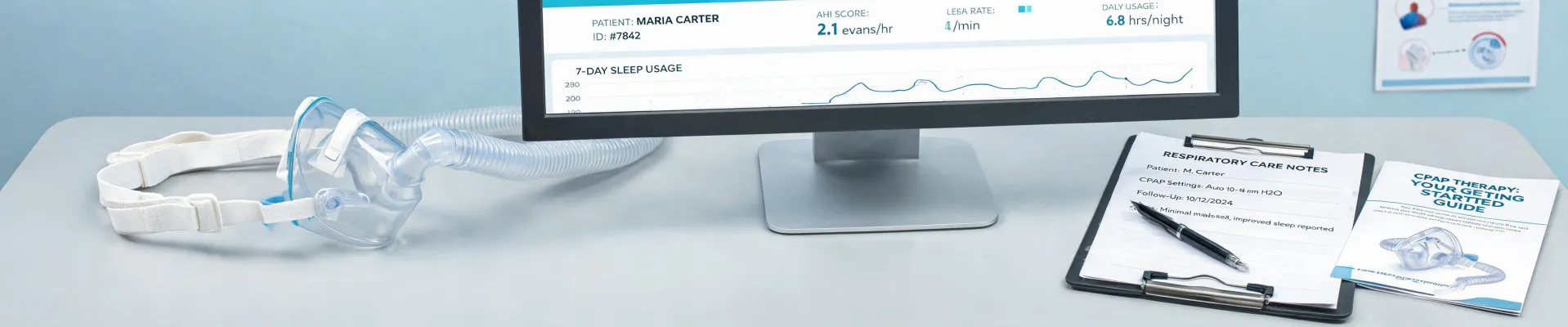
I've been running procurement for a regional network of sleep clinics and satellite imaging centers since 2017. If I remember correctly, my first real error came in March of that year — a bulk order of CPAP machines where I'd focused entirely on pressure range, ramp settings, and noise specs, and completely ignored the mask interface ecosystem.
We spent the next three months fielding patient complaints about comfort. The machines were excellent. The masks were the problem. In sleep therapy, the mask is the therapy — the machine is just the engine behind it. I didn't understand that yet.
Since then I've made mistakes at every scale. I now keep a checklist. We've caught 31 potential errors with it in the past 18 months. Some would have cost $100. Some would have cost six figures. Every single one was avoidable.
The Mistakes, Smallest to Largest
1. The Oxygen Flowmeter Nobody Could Actually Use ($180 each)
In 2022, I ordered twelve oxygen flowmeters with integrated humidifier bottles for our respiratory therapy department. Good specs, competitive price, standard fittings — or so the listing said.
They sat in storage for fourteen months. Turns out our wall-mounted regulators used a different thread standard than what I'd assumed from the product page. Not a disaster on one unit, but multiplied across the order, that's over $2,100 of dead inventory plus rush freight when we finally reordered the correct ones.
Lesson: standard fittings are not standard. Verify the existing infrastructure before ordering accessories for it. Same rule applies to the tubing and injectors on a CT scan machine.
2. The Electric Wheelchair That Sat Unused Beside a $900 Manual Chair
This one I've watched play out across three facilities now. Electric vs manual wheelchair purchasing sounds like an obvious question — of course the electric is better for mobility, right?
Everything I'd read on rehabilitation equipment said electric models outperform manual ones for patient independence. In practice, our usage data told a different story.
We bought two electric models in 2021 (during the post-COVID equipment rush) for a rehab wing. Beautiful engineering. Total cost with chargers and accessories came to around $9,400 — actually, closer to $9,800 once I added the spare batteries. Six months of usage logs showed they were requested roughly 40% less often than our aging manual chairs. Three reasons the procurement sheet never captured:
- Weight — patients and staff both found them harder to maneuver in tight corridors
- Charging logistics — nobody had been assigned responsibility for keeping them charged
- Transfer difficulty — the motors actually made some transfers harder, not easier
I don't have industry-wide hard data here, but based on our three facilities, my honest take is that electric wheelchairs make sense as a supplement to manual fleets, not as a replacement.
3. The CPAP Decision I Got Backwards (ResMed AirSense 10 + AirFit F30i)
The ResMed AirSense 10 CPAP is by most clinical measures an excellent machine. We run them across our clinics now. But in 2019, we spent two full quarters on a competitor's platform — not because of any machine problem, but because of a mask-related workflow issue we'd created ourselves.
Here's the nuance most buyers miss: in sleep therapy, the machine and the mask are effectively one purchase decision even though they're separate line items on separate POs. I recommend ResMed's ecosystem for most of our patient mix — the AirFit F30i, for example, solved a specific leak problem our side-sleeping patients had with traditional full face masks. But if your clinic has already standardized on a particular mask type for fitting, billing, or patient-population reasons, the machine is not the first variable to optimize.
When we moved back to ResMed in early 2020, it was because three months of retrospective data showed mask-related returns dropped about 22% once we offered the AirFit F30i and nasal pillow options side-by-side. The machine was identical to what we'd already stocked. The outcomes weren't.
That said — if your patient population skews toward one specific mask type that ResMed doesn't lead on, this logic may not hold for you. Honest answer: it depends on your mix.
4. The CT Scan Machine We Underused for Eight Months (~$340,000)
This is the one that still stings. In 2021, we purchased a CT scan machine with a 128-slice configuration for a satellite imaging center. The specs matched expected volume. The installed price — around $340,000 — was competitive.
The problem wasn't the machine. It was everything around it. Technologist training slipped. The room's power conditioning required two extra months of work. Our referring physicians didn't have a clear protocol for which cases went to the new scanner versus our existing units.
The numbers said we were ready. My gut said we weren't — and I talked myself out of it because the pricing window was closing.
The machine worked flawlessly. It just ran at roughly 40% of forecast utilization for the first eight months. Even being generous with the math, that's about $90,000 of opportunity cost burned while I learned a lesson I'd already known.
Where This Rule Doesn't Apply
I need to be honest about the limits of what I just told you. My experience is based on mid-sized facilities — sleep clinics and satellite imaging centers, about 200 equipment decisions total. If you're a large hospital system with a formal equipment committee, dedicated biomedical engineering staff, and workflow analysts on payroll, some of these mistakes simply won't happen to you the same way.
Same goes for consumables and true commodities. For gloves, standard tubing, basic supplies — spec comparison genuinely is the right approach. Workflow fit matters less when the product is interchangeable.
The workflow-first rule applies when:
- Training meaningfully affects outcomes (anything with software)
- Accessories or interfaces determine usability (CPAP masks, wheelchair chargers, CT injectors)
- Physical installation constrains the purchase (oxygen flowmeter fittings, imaging room requirements)
- The cost of non-use exceeds the cost of the equipment
For everything else, buy the best spec at the best price and move on. Not every decision deserves eight weeks of analysis.
What I Do Now Instead
Every purchase over $500 now requires three things before anyone opens a spec sheet:
- A one-page description of how the equipment gets used day-to-day, written by the person who will actually use it
- A compatibility check against existing infrastructure — fittings, power, software, workflows
- A named individual responsible for training and adoption
That's it. No framework, no scoring matrix. Just three questions that would have prevented nine of my eleven documented mistakes.
The other two needed more judgment than process. I'm still working on those.

Elena Varga
Elena Varga is a medical imaging systems analyst covering CT scanners, MRI systems, ultrasound platforms, digital radiography, mammography, and ophthalmic imaging equipment. She references IEC 60601-2-44 for CT safety and essential performance while examining CTDIvol, dose-length product, spatial resolution, slice thickness, field uniformity, throughput, uptime, and DICOM interoperability. Her work helps radiology leaders, medical physicists, biomedical engineers, and procurement teams compare image quality, radiation management, workflow integration, serviceability, and lifecycle cost.