How to Choose Medical Equipment Vendors When You're in Charge of Everything (and Nothing)
· Elena Varga
Why there’s no “one-size-fits-all” answer
When I took over purchasing for our 400-bed facility in 2020, I thought I’d find a few vendors who could cover everything. CPAP machines, incontinence products, ICU monitors, infant warmers – how different could they be? Turns out, very.
Here’s the thing: medical devices aren’t like office supplies. A single vendor selling you paper clips and toner can probably also sell you coffee. But a company that makes sleep apnea devices? They’re unlikely to be experts in neonatal thermoregulation. And that’s fine. The best vendors know where their expertise ends.
Four scenarios, four different approaches
After five years and roughly 300 purchase orders, I’ve categorised our equipment needs into four buckets. Each demands a different vendor strategy.
Scenario A: Sleep / Respiratory (CPAP, BiPAP, masks)
What we buy: ResMed AirSense 10/11, AirFit P10 nasal pillows, full-face masks, heated humidifiers.
Vendor type needed: Specialised respiratory device manufacturer with a complete ecosystem.
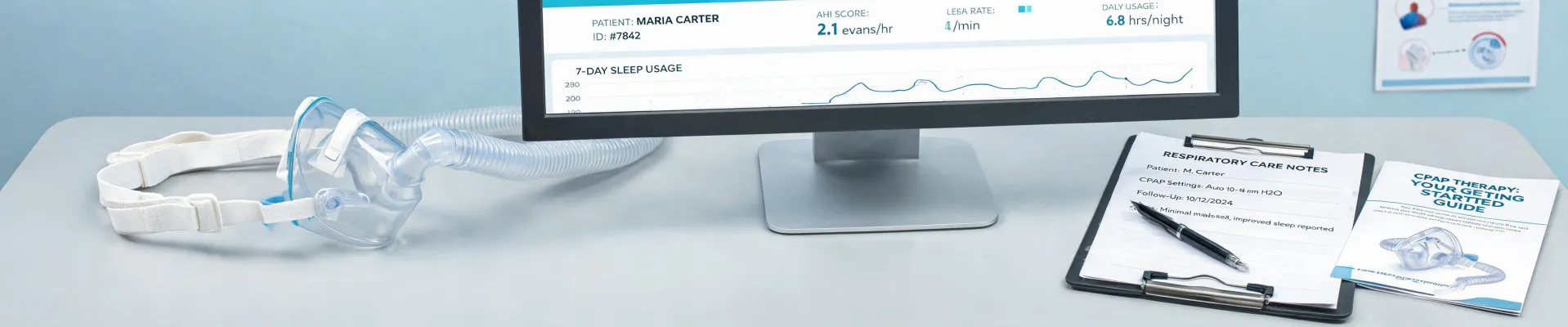
For sleep apnea, we stick with ResMed. Why? They’re the global leader – not just in devices but in mask options, data management (myAir app), and patient support. Their AirFit P10 nasal pillow? I’ve had patients call it “the one that finally makes therapy bearable.” That kind of product-specific feedback matters.
What I learned the hard way: In my first year, I ordered a batch of “compatible” third-party masks to save 30%. They didn’t seal properly. Patient complaints went up. My boss’s boss heard. The savings weren’t worth the hassle. Now I only buy direct from ResMed or authorised distributors. (Source: ResMed.com, 2024; verify current models.)
Scenario B: Incontinence Products
What we buy: Disposable briefs, underpads, skin care wipes.
Vendor type needed: Reliable consumables supplier with consistent quality.
This is a completely different world. The margin on incontinence products is thin, and the supply chain is about logistics, not technology. We use a regional distributor who understands delivery schedules and labelling. Would ResMed supply these? No – and they shouldn’t. A vendor who says “we do everything” usually spreads themselves too thin. I’d rather work with a specialist who knows their limits.
Scenario C: ICU Monitors
What we buy: Patient monitors, central station software.
Vendor type needed: Critical-care technology partner with integration support.
These are big-ticket, multi-year investments. We chose Philips (no, not because I have anything against ResMed – different space entirely). The key here is training and after-sales service. Our ICU team needed 4 on-site sessions and a 24/7 hotline. Pro tip: don’t assume “standard troubleshooting” applies. We learned that after a $15,000 monitor went down and the vendor’s phone tree sent us in circles. (Ugh.)
Scenario D: Infant Warmers
What we buy: Radiant warmers, incubators.
Vendor type needed: Niche perinatal equipment manufacturer.
This is the most specialised category on our list. We use a company called GE or Dräger – the only players who make these. When I first searched “what is an infant warmer”, I realised how much I didn’t know. These devices have strict calibration requirements and safety certifications (ISO 13485, FDA registration). A vendor who can’t produce those documents? Walk away. I once assumed a cheaper model would be “close enough” – the neonatal unit director caught the discrepancy before it harmed a baby. That was a close call.
How to decide which scenario applies to you
If you manage procurement for a mid-sized hospital or clinic, ask yourself:
- Is the device life-critical or comfort-only? (Monitors and infant warmers = life-critical; CPAP = therapy; incontinence = comfort.)
- Does it require ongoing software or data integration? (Respiratory and ICU yes; incontinence and infant warmers no.)
- Are patients directly selecting and using the device? (Sleep apnea masks – yes, fitting matters. Infant warmers – no, clinicians choose.)
I used to think one good vendor relationship would solve everything. After three years and about 150 orders, I finally understood: specialisation isn’t a weakness – it’s a signal of expertise. The vendor who told me “we don’t do baby warmers, but here’s the company that does” earned my trust for everything else. That’s the kind of vendor you want – one who knows their boundaries and respects yours.
Prices as of May 2024; verify current rates with your preferred distributors.

Elena Varga
Elena Varga is a medical imaging systems analyst covering CT scanners, MRI systems, ultrasound platforms, digital radiography, mammography, and ophthalmic imaging equipment. She references IEC 60601-2-44 for CT safety and essential performance while examining CTDIvol, dose-length product, spatial resolution, slice thickness, field uniformity, throughput, uptime, and DICOM interoperability. Her work helps radiology leaders, medical physicists, biomedical engineers, and procurement teams compare image quality, radiation management, workflow integration, serviceability, and lifecycle cost.