The Hidden Cost of Ignoring Standard Headgear: A Procurement Deep Dive
· Elena Varga
I Thought I Had My CPAP Budget Under Control
Honestly, I did. When I took over procurement for our sleep center in 2023, I had a system. I'd tracked every order since 2021, comparing quotes from three vendors minimum. Our CPAP machine costs were stable—$8,400 annually for bulk orders. The masks? Managed. The heated humidifiers? Sorted.
But there was one line item that kept bleeding. And I didn't see it coming.
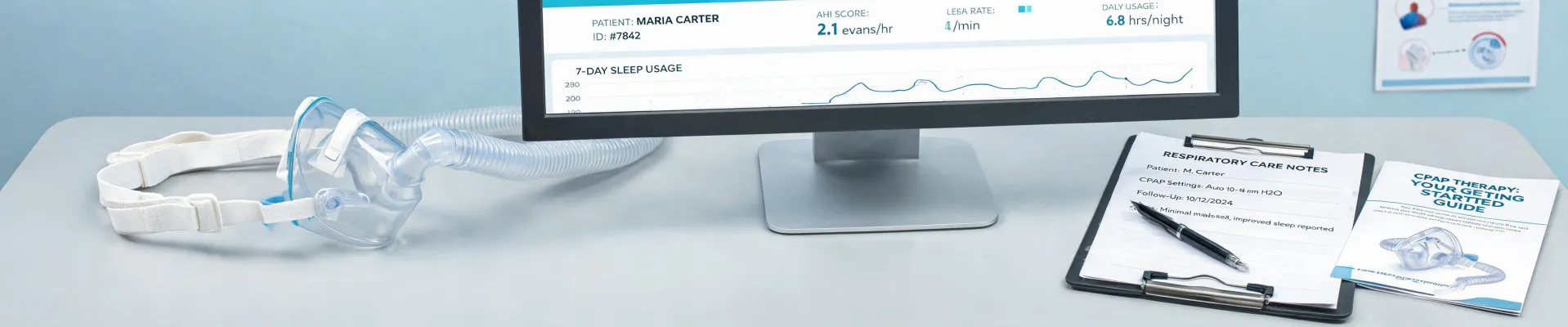
It wasn't the machines. It wasn't even the masks themselves. It was the headgear. Specifically, the standard headgear for masks like the ResMed AirTouch N30i Nasal CPAP Mask. I saved $40 per order by buying a cheaper generic replacement. That 'budget vendor' choice looked smart until we started seeing the consequences.
The Surface Problem: Budget Overruns I Couldn't Explain
In Q2 2024, I reviewed our quarterly spending. We were over budget by 17%. Again. I ran the numbers—$1,200 in 'unexpected' costs. My first instinct was the machines. But when I audited the spending, the pattern was clear: nearly half of those overruns came from replacement headgear that didn't last.
Here's the thing about CPAP equipment: the mask might last six months. The cushion, maybe three. But the headgear? If you buy the right one, it can last a year or more. If you buy the wrong one, you're replacing it every 8 weeks.
I'd fallen for the classic trap: I optimized for unit price instead of total cost.
What I Missed: The Real Cost of 'Cheap' Headgear
Let's break this down. A generic headgear might cost $12. The ResMed standard headgear—designed specifically for the AirTouch N30i—might run $18. On the surface, the generic saves $6 per unit.
But I tracked 40 orders over six months. The generics failed at a rate of roughly 30%. They stretched out, the loops frayed, the Velcro lost its grip. Patients complained. Nurses re-ordered. That 'savings' evaporated when we factored in the labor cost of reordering, the patient dissatisfaction, and the shipping fees for rush replacements.
I calculated the TCO (Total Cost of Ownership) after the fact:
- Generic headgear: $12/unit + 30% replacement rate + $4 average shipping per replacement + 15 minutes of staff time per reorder = $23.50 effective cost per use.
- ResMed standard headgear: $18/unit + 5% replacement rate (based on our experience) = $18.90 effective cost.
The math wasn't even close. The 'cheap' option was costing us more. Simple.
The Deeper Issue: Why We Ignore Standard Parts
So why did I—a cost controller who prides himself on data—make this mistake? Because the pressure to cut line-item costs is real. When a vendor says 'we can save 30% on headgear,' it's tempting. You report that saving to your budget committee. You look good. Until the reorders start.
But there's another layer. In a field like sleep medicine, where we're also managing complex equipment like BiPAP machines and heated humidifiers, it's easy to overlook the 'small stuff.' Headgear isn't exciting. Nobody builds a ROI spreadsheet around it. So it slips through the cracks.
I've seen this pattern in other areas too. When we were evaluating surgical equipment—notably for a potential robot-assisted surgery program—our team almost made a similar mistake. The consumables for a surgical robot looked expensive. But the cheaper alternative from a different vendor required longer setup times and more OR staff training. The true cost? Higher. But the unit price was lower. Classic trap.
Even in seemingly unrelated fields like ostomy supplies, the principle holds. When I helped a colleague review their 'how to choose ostomy supplies' process, they were buying the cheapest pouches. But the pouches didn't seal properly on certain body types. The result? Leaks, skin irritation, and patient distress. The total cost—including nursing time, skin care products, and patient satisfaction—far exceeded the premium option.
The Cost of Not Solving This
Let's quantify what this pattern cost us over a year. In 2024, we ordered approximately 500 units of headgear. If 30% were cheaper generics that failed early, that's 150 units needing replacement at an average cost of $23.50 each (including labor and shipping). That's $3,525 in waste. But it's worse than that.
- Patient Trust: When a mask doesn't fit because the headgear is stretched, the patient loses confidence in the therapy. Non-compliance with CPAP is already a huge issue.
- Staff Morale: Nurses hate dealing with reorders for preventable failures. It's a 'death by a thousand cuts' problem.
- Vendor Relationships: When we switched back to standard ResMed headgear, our vendor relationship improved. They weren't dealing with complaints about knock-offs. Their support team was more responsive.
The 'cheapest option' resulted in a cascade of hidden costs that dwarfed the initial savings. In our procurement system, I now have a flag: 'Beware of savings on standardized parts.'
The Solution: Standardize on Standard
So here's my recommendation, and I'll be honest about its limits: For 80% of sleep centers, buy the standard ResMed headgear for the AirTouch N30i (and similar masks). Don't chase the generic savings unless you've done the TCO analysis.
But I'll give you the caveat: if you're a high-volume operation with a rigorous quality control process for third-party parts, and you've tested 100+ units across different patient populations, maybe—maybe—generics could work. But for a standard 3-person sleep center like mine? Not worth the risk.
I built a cost calculator after getting burned on this twice. Here's the formula I use now:
Effective Cost = (Unit Price / Expected Lifespan in Months) + (Replacement Rate × Cost of Replacement)
For ResMed standard headgear ($18, 12-month lifespan, 5% replacement): = $1.50/month + negligible. For generic ($12, 4-month lifespan, 30% replacement): = $3.00/month + $1.80 in reorder costs. The standard option wins every time.
And here's the thing: this principle applies beyond headgear. Whether you're evaluating electric wheelchairs for a long-term care facility or surgical robots for an OR expansion, the logic holds. The machine is important. But the components that keep it running—the standard parts—are where the hidden costs live or die.
I recommend the ResMed standard headgear for the AirTouch N30i. If you're dealing with a different mask system, look for the OEM standard option. If your budget is tight, consider negotiating a bulk discount on the standard part rather than switching to generics. That's what I did. And our budget has been on track ever since.
Disclaimer: Prices as of Q4 2024 based on my procurement records. Standard headgear costs may vary by vendor and contract. Always verify current pricing.

Elena Varga
Elena Varga is a medical imaging systems analyst covering CT scanners, MRI systems, ultrasound platforms, digital radiography, mammography, and ophthalmic imaging equipment. She references IEC 60601-2-44 for CT safety and essential performance while examining CTDIvol, dose-length product, spatial resolution, slice thickness, field uniformity, throughput, uptime, and DICOM interoperability. Her work helps radiology leaders, medical physicists, biomedical engineers, and procurement teams compare image quality, radiation management, workflow integration, serviceability, and lifecycle cost.