ResMed Mask Types and the Medical Equipment Questions Buyers Actually Ask Me
· Elena Varga
-
1. What are the ResMed mask types?
-
2. What is a ResMed foam mask?
-
3. If I already have a CPAP machine, can I swap to any ResMed mask?
-
4. What is infection control, and why should an equipment buyer care?
-
5. What makes a CT scan machine order different from CPAP gear?
-
6. What should I know before a robotic surgery system arrives?
-
7. How do I keep an urgent equipment order from becoming a disaster?
-
8. Is a quick decision better than a perfect one?
If you've ever watched a purchase order land two hours before an accreditation visit, you know that stomach-drop feeling. In my role coordinating medical equipment for sleep labs, imaging centers, and outpatient surgery centers, I've handled 200+ urgent orders in six years. Some were same-day turnarounds for a clinic that ran out of CPAP masks before a patient consult. Others were bigger, slower, and sneakier.
Some things I learned from manuals. A lot came from mistakes. Here are the questions that actually show up in my inbox, plus the answers I would give a buyer who has a real deadline.
- What are the ResMed mask types?
- What is a ResMed foam mask?
- If I already have a CPAP machine, can I swap to any ResMed mask?
- What is infection control, and why should an equipment buyer care?
- What makes a CT scan machine order different from CPAP gear?
- What should I know before a robotic surgery system arrives?
- How do I keep an urgent equipment order from becoming a disaster?
- Is a quick decision better than a perfect one?
1. What are the ResMed mask types?
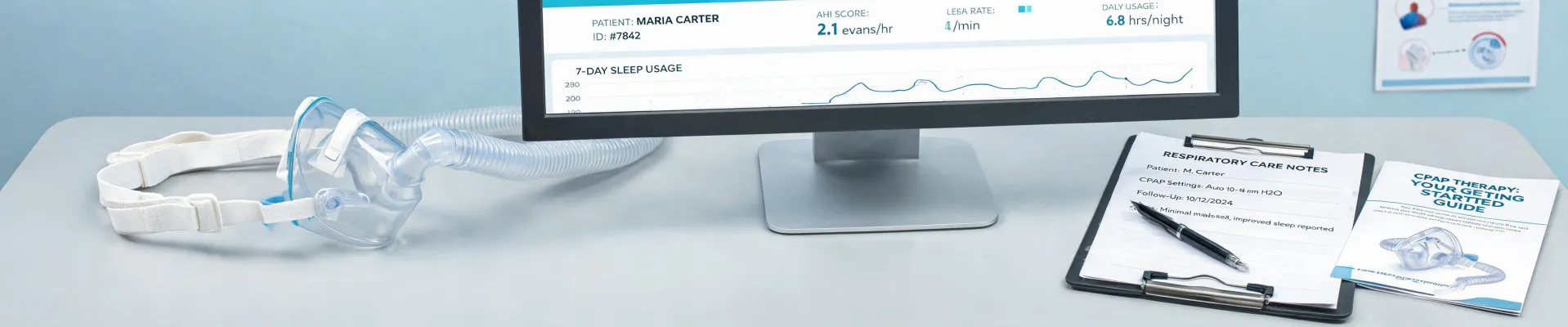
If you're new to sleep therapy equipment, the ResMed mask types break into four main categories: nasal masks, nasal pillows, under-the-nose masks, and full face masks. Nasal masks cover your nose but not your mouth. Nasal pillows sit just under the nostrils. Under-the-nose masks, like the AirFit N30, sit below the nose and feel lighter. Full face masks, like the AirFit F20 or F30, cover both nose and mouth for people who breathe through their mouth at night.
The category matters less than fit. A full face mask might look like the safe choice, but if it doesn't fit well, it will leak no matter how good it is. That's why I ask clinicians to check the fit rather than picking from a catalog.
2. What is a ResMed foam mask?
When someone asks about a ResMed foam mask, they're usually talking about the AirTouch F20. It's a full face mask with a memory foam cushion instead of the usual silicone cushion. The foam feels softer and can be kinder to sensitive skin.
Here's the trade-off: the foam cushion needs more careful cleaning. You can't soak it or use alcohol wipes the way you can with silicone, and it needs to be replaced more often. ResMed's user guide for the mask (resmed.com) has the exact steps. I'd rather see a buyer spend two extra minutes reading that guide than ruin a $40 cushion with the wrong cleaner.
3. If I already have a CPAP machine, can I swap to any ResMed mask?
Probably, but not automatically. Most ResMed masks use standard 22mm tubing, so they'll physically connect to many CPAP devices. But the right mask type depends on your pressure settings, breathing pattern, and whether you move from a nasal style to a full face style. If that changes, your settings may need adjustment by a clinician.
I've also seen people buy a mask because a relative liked it. That's a hit-or-miss game. ResMed's product pages list compatible devices, and the user guides include tube and mask details. Check those before you order, not after it arrives.
4. What is infection control, and why should an equipment buyer care?
Before I answer the clinical part, here's the quick procurement version: infection control is the practices that stop infections from spreading in healthcare settings. According to the CDC (cdc.gov), it includes hand hygiene, PPE, safe injection practices, cleaning and disinfection, and proper reprocessing of medical devices.
Why should you care? Because equipment is only safe when the people using it know how to clean it. A CPAP humidifier left wet can grow biofilm. A surgical instrument that is processed wrong can be a bigger problem than the device failing. If you buy, sell, or rent medical equipment, ask about the reprocessing instructions and make sure the clinical team has them before the order ships.
5. What makes a CT scan machine order different from CPAP gear?
A CT scan machine is not a 'just ship it' item. The machine itself matters, but the room around it matters just as much. Power requirements, weight load, cooling, lead shielding, network access, service clearance—all of that has to line up.
In March 2024, an imaging center asked us to source a CT scan machine with 11 days' notice. Normal lead time was about six weeks. We found a refurbished unit, booked medical freight, and the delivery arrived on time. To be fair, the vendor did their part. The surprise was the exam room. The electrical contractor and physicist weren't scheduled, so the machine sat on its skid for another week. The lesson: verify the room readiness checklist on the same day you sign the purchase order.
6. What should I know before a robotic surgery system arrives?
I'm not a surgeon, so I won't pretend to pick the clinically best robotic surgery system. But I've seen what makes an order go sideways: the training plan.
A robotic surgery system can be delivered on schedule and still be a very expensive paperweight if the surgical team hasn't done their training and credentialing. We lost a contract in 2022 because we focused on the delivery date and didn't ask about staff readiness. The other vendor had a slower delivery but a better rollout plan. That was a no-brainer for the hospital.
My advice: before you commit to a delivery date, ask the hospital these questions. Who will install it? Who will train the team? Who has biomed troubleshooting access? If those answers are shaky, the delivery date is not the real deal-breaker.
7. How do I keep an urgent equipment order from becoming a disaster?
Bottom line: urgent orders fail early in the chain, not at the shipping dock. After a few bad experiences with discount freight brokers, we now use a short list of medical logistics vendors and build in a 48-hour buffer whenever possible.
If a vendor says 'no problem' to every deadline, that's a red flag. The best ones tell you what can't happen. They'll say, 'I can get it there Thursday, but the lot numbers will be separate.' That's useful information. A realistic timeline with one backup plan beats an overpromised delivery with none.
8. Is a quick decision better than a perfect one?
Usually, yes. But 'quick' doesn't mean reckless. A good decision now beats a perfect decision next week, as long as you have a Plan B.
I remember approving a rush fee on a mask order and immediately thinking, 'Could I have gotten one more quote?' I didn't relax until the lot numbers matched the packing slip. That anxiety is normal. What helped was knowing we had a backup vendor who could overnight a similar mask if the first one got stuck in transit.
One caveat: my experience is mostly with mid-sized sleep labs and outpatient centers. If you're in a large hospital system with its own biomed team, your process might be different. But the question is the same: who's ready on the other end when the equipment arrives?

Elena Varga
Elena Varga is a medical imaging systems analyst covering CT scanners, MRI systems, ultrasound platforms, digital radiography, mammography, and ophthalmic imaging equipment. She references IEC 60601-2-44 for CT safety and essential performance while examining CTDIvol, dose-length product, spatial resolution, slice thickness, field uniformity, throughput, uptime, and DICOM interoperability. Her work helps radiology leaders, medical physicists, biomedical engineers, and procurement teams compare image quality, radiation management, workflow integration, serviceability, and lifecycle cost.