Procuring Medical Respiratory Equipment: ResMed CPAP vs. Anesthesia Machine Components – A Buyer's Guide to Reliability vs. Specialization
· Elena Varga
When I took over purchasing for our regional medical equipment consortium in 2022, I inherited a messy catalog. We needed everything from sleep apnea devices for our sleep centers to components for our anesthesia machines. My first instinct was to find a single vendor that could handle it all—simplify my life, right?
I was wrong. After a few expensive lessons, I've learned that comparing a specialized CPAP supplier like ResMed to a generalist supplier of mechanical ventilator parts isn't just apples to oranges—it's apples to engine blocks. Here's the framework I now use when deciding between a focused, high-reliability vendor and a broad-strokes components supplier.
The Core Comparison: Specialist Ecosystem vs. Parts Generalist
Let's set the stage. We're not comparing two equivalent products. We're comparing two procurement strategies.
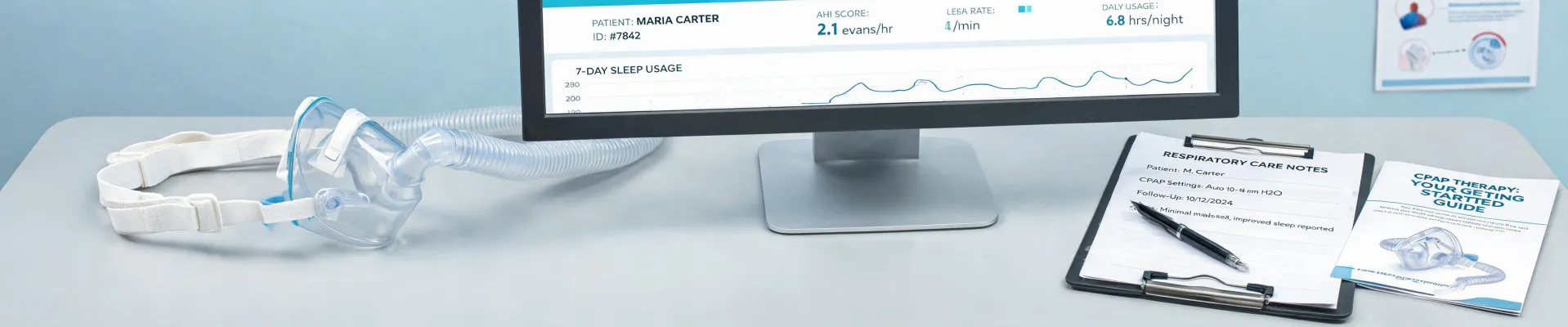
- Strategy A (Specialist Ecosystem): Partnering with a brand like ResMed for sleep therapy—CPAP/BiPAP devices, masks (like the AirTouch N30i), heated humidifiers, and battery backups. You're buying into a closed, highly optimized system.
- Strategy B (Generalist Components): Sourcing discrete parts and devices for other respiratory needs—anesthesia machine components, mechanical ventilator sensors, or even unrelated equipment like cryosurgery devices. You're buying individual pieces from a broader supplier.
The question isn't 'which is better?'—that's a trap. The question is: What's the risk/reward profile for each approach, and which fits your specific procurement scenario?
Dimension 1: Reliability vs. Flexibility
I've only worked with ResMed for sleep therapy—about 60 orders covering devices, masks, and the AirTouch N30i. My experience is based on that specific segment. If you're sourcing only anesthesia machine components, your experience might differ significantly.
ResMed's ecosystem is incredibly reliable. If I order a BiPAP battery backup, I know it'll work with their devices. No guesswork. If a patient has an issue, the clinical team knows the ecosystem. But here's the downside: you're locked in. When a doctor requested a specific mask that wasn't in the ResMed AirTouch line, I couldn't swap it. I had to find a third-party mask or change the device.
With a generalist components supplier for, say, a mechanical ventilator or anesthesia machine, I have infinite flexibility. Need a specific valve? They'll find it. But 'find it' isn't the same as 'it's in stock and tested.' The reliability drops. The risk of getting a part that doesn't quite work? Much higher.
Conclusion here: If operational certainty is your top priority—like for a sleep lab with standardized equipment—the specialist ecosystem wins. If you're a research lab or a hospital that needs to adapt, the flexibility of a parts generalist is worth the headache.
Dimension 2: Total Cost of Ownership (TCO)
This is where my early mistake cost me. I looked at the unit price for a CPAP machine and compared it to the cost of a ventilator component. That's like comparing the price of a car to the price of a tire.
With ResMed, the TCO includes the device, the masks (which need replacing), the battery backup, the heated humidifier, and the MyAir digital management platform. It's a subscription-like model for consumables. The up-front cost is higher, but the ongoing support and clinical outcome data reduce long-term operational risk. The vendor who couldn't provide proper invoicing cost us $2,400 in rejected expenses? That was with a generalist, not ResMed.
With a generalist supplier for anesthesia machine components, the up-front cost is lower. But you have zero guarantee of long-term stock. I've spent hours hunting for a discontinued sensor for a 5-year-old ventilator. The 'savings' on the initial order were wiped out by one emergency overnight shipment.
Conclusion: For high-stakes, regulated equipment (like sleep therapy or anesthesia), a higher up-front investment with a specialist that guarantees compatibility and long-term support is almost always cheaper in the long run.
Dimension 3: Vendor Expertise & Support
Honestly, I'm not sure why some vendors claim to cover both ends of this spectrum. A supplier that sells cryosurgery devices and CPAP masks? That's a red flag for me now.
ResMed's sales and support teams live sleep apnea. They can tell you exactly how the AirTouch N30i fits on a patient who uses a BiPAP. They can troubleshoot a battery backup issue over the phone. They're experts.
The generalist component supplier? Their rep might be great at sourcing a mechanical ventilator part, but ask them about the clinical implications of a specific mask seal type, and you'll get a blank stare followed by a 'Let me check with the manufacturer.'
The vendor who said 'this isn't our strength—here's who does it better' earned my trust for everything else. I'd rather work with a specialist who knows their limits than a generalist who overpromises.
Conclusion: If your procurement requires clinical or application-specific knowledge, the specialist is the only real choice.
When to Pick Which Strategy
Based on my experience managing about $350k annually across 8 vendors for 3 locations, here's my rule of thumb:
Choose the Specialist (ResMed-like Ecosystem) when:
- Patient safety and device compatibility are non-negotiable.
- You need a guarantee of long-term consumables (masks, filters).
- You want a single point of contact for a complex therapeutic area.
- You have standardized equipment (e.g., all sleep labs use the same CPAP model).
Choose the Generalist Component Supplier when:
- You're sourcing discrete parts for older or varied equipment.
- You need flexibility and aren't locked into a proprietary ecosystem.
- The component is non-clinical (e.g., a housing, a fan, a connector).
- Price is the primary driver and you can absorb the risk of stockouts.
Dodged a bullet a few times now. The cost of downtime from a failed generalist part is far higher than the premium you pay for a specialist. For sleep therapy and critical respiratory care, I'll take the specialist's guarantee every time.

Elena Varga
Elena Varga is a medical imaging systems analyst covering CT scanners, MRI systems, ultrasound platforms, digital radiography, mammography, and ophthalmic imaging equipment. She references IEC 60601-2-44 for CT safety and essential performance while examining CTDIvol, dose-length product, spatial resolution, slice thickness, field uniformity, throughput, uptime, and DICOM interoperability. Her work helps radiology leaders, medical physicists, biomedical engineers, and procurement teams compare image quality, radiation management, workflow integration, serviceability, and lifecycle cost.