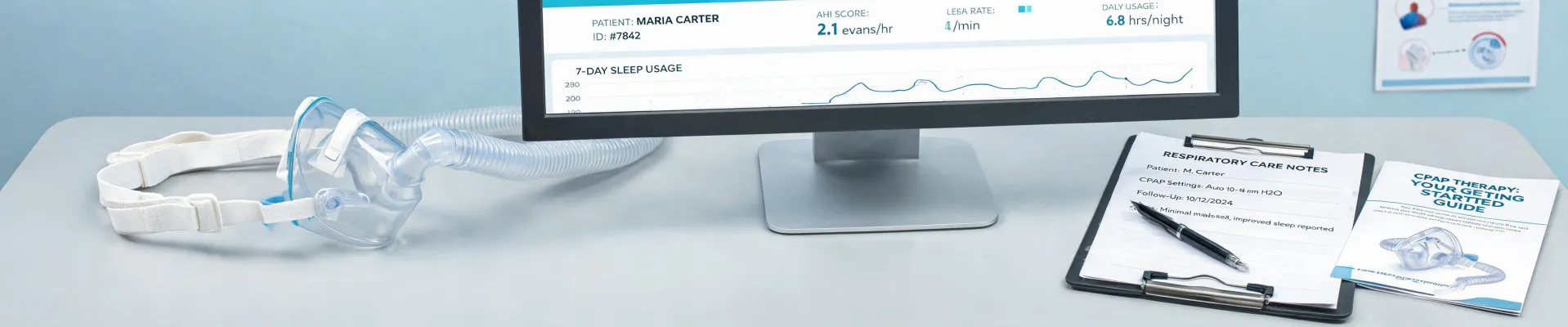
CPAP vs Portable Oxygen vs Vital Signs Monitors: What a Procurement Pro Needs to Know in 2025
· Elena Varga
-
Why This Comparison Matters Now
-
Framework: The Four Dimensions That Matter
- 1. Portability vs. Functionality: ResMed AirMini vs. Full‑Face Masks vs. Oxygen Concentrators
-
2. Total Cost of Ownership: More Than the Purchase Order
-
3. User Adoption Curve: Training Your Staff and Patients
-
4. A Quick Detour: How Does Hemodialysis Work?
-
So How Do I Decide?
Why This Comparison Matters Now
When I took over purchasing in 2020 for our multi‑location medical group, I thought buying a CPAP machine was pretty straightforward. Pick a brand, check the mask options, order. Boy, was I wrong.
By 2024, our clinicians started requesting not just ResMed CPAPs but also portable oxygen concentrators for home care patients, vital signs monitors for nurse visits, and even asked me to understand how hemodialysis works for a new renal unit we were setting up. The job morphed from “buy a machine” to “understand the whole patient care ecosystem.”
Honestly, what was best practice in 2020 may not apply in 2025. The fundamentals of procurement haven't changed—reliability, cost, compliance—but the technology landscape sure has. So I want to walk you through a comparison framework I use now when I'm deciding between a ResMed AirMini with an adapter and a full‑face mask like the AirFit X30i, versus a portable oxygen concentrator or a vital signs monitor. Yes, they serve different clinical purposes, but from a procurement standpoint the decision trade‑offs are surprisingly similar.
Framework: The Four Dimensions That Matter
I compare every piece of equipment along four axes:
- Portability vs. Functionality – Can it travel? Does it lose features when small?
- Total Cost of Ownership – Not just the sticker price. Consumables, maintenance, training.
- User Adoption Curve – How quickly can caregivers and patients learn it?
- Regulatory & Compliance Fit – Does it meet our payer requirements and state regulations?
Let's apply this to the gear you're likely comparing.
1. Portability vs. Functionality: ResMed AirMini vs. Full‑Face Masks vs. Oxygen Concentrators
ResMed AirMini + Adapter
The AirMini is tiny—about the size of a sandwich. Pair it with the AirMini adapter (which lets you use standard ResMed tubing) and you've got a travel‑ready CPAP that fits in a carry‑on. But it only works with a limited set of masks. Our clinicians love it for overnight trips, but they complain about the proprietary humidification system (it uses a disposable cartridge, not a water chamber).
ResMed AirFit X30i Full Face Mask
This is the opposite: full mask, full features. The X30i has a top‑of‑head tube connection that makes it easy to sleep on your side. Patients who use BiPAP at higher pressures often prefer it because it doesn't leak. But it's bulky—definitely not travel‑friendly.
Portable Oxygen Concentrator (POC)
POCs like the Inogen or Philips SimplyGo are a different beast. They weigh 10–20 lbs, deliver 2–5 L/min continuous or pulse flow, and can run on battery for 2–10 hours. Bottom line: They're portable enough for car trips but not for plane travel (most airlines only allow specific models). And they cost $2,000–$5,000 upfront plus periodic sieve bed replacement ($300–$600).
Vital Signs Monitor
Monitors are increasingly handheld (think Welch Allyn ProBP or Masimo). They measure BP, SpO2, pulse, temp, sometimes ECG. Portability is usually fine—they fit in a nursing bag. But the real constraint is connectivity: many older models still require cable syncing, while new ones upload via Bluetooth or cellular. Our nurses hate Bluetooth that disconnects mid‑shift.
Comparison takeaway: If your users prioritize extreme portability (frequent business travelers), the AirMini + adapter wins. If they need robust therapy at high pressures (severe OSA), the X30i is the no‑brainer. Oxygen concentrators are for patients who need supplemental O2 away from home, and vital signs monitors are about data flow, not weight. I assumed “portable” meant the same thing across categories. Didn't verify. Turned out our nursing supervisor wanted a monitor that fits in a pocket, not a CPAP that fits in a suitcase.
2. Total Cost of Ownership: More Than the Purchase Order
This is where I've eaten mistakes. In Q3 2022, I ordered 10 ResMed AirFit X30i masks at $159 each—great bulk pricing. But I forgot to factor in the replacement headgear ($29 per quarter) and the cradle cushion ($19 per month). Over 18 months, the consumables actually cost more than the mask itself.
Compare that to portable oxygen concentrators: they have almost no consumables (just a filter change every 6 months), but the battery degrades after 300 charge cycles, and replacement batteries run $400–$800. Plus maintenance labor—our biomed team charges $75 per hour for POC service.
Vital signs monitors are a different game. Cuffs wear out ($18 each, replace every 6 months), SpO2 sensors ($45 each) fail if the patient moves, and batteries (if not rechargeable) add up. A monitor that uses AA batteries? I learned that lesson after our accounting team flagged $2,400 in rejected expenses for non‑rechargeable batteries.
According to a 2024 survey by the Healthcare Supply Chain Association, consumables account for 40–60% of the total cost of medical devices over 5 years (source: HSCA 2024 Annual Benchmarking Report). Always calculate the three‑year TCO before signing a PO.
3. User Adoption Curve: Training Your Staff and Patients
The AirMini is kind of intuitive, but the app (ResMed myAir) still trips up some patients. The AirFit X30i, in contrast, is a classic mask—any respiratory therapist can teach a patient to put it on in 5 minutes. Our therapists actually prefer it because they don't get the “how do I stop the leak?” phone calls.
Portable oxygen concentrators have a steeper learning curve. Teaching a 75‑year‑old to switch between continuous and pulse flow, clean the nasal cannula, and change the cannula filter takes a full home visit (cost: $85 per visit). Vital signs monitors? Super easy—press a button. But syncing the data to our EMR? That's a whole other headache. We were using the same words (“wireless”) but meaning different things. I said “wireless sync,” the vendor heard “Bluetooth to a smartphone,” but our IT department wanted direct Wi‑Fi to the hospital network. Discovered this when the first batch arrived.
4. A Quick Detour: How Does Hemodialysis Work?
You didn't expect this in a CPAP comparison, but hear me out. When our renal unit asked me to evaluate dialysis equipment, I had to learn the basics. Hemodialysis filters blood through a machine—blood goes from the body into a dialyzer (artificial kidney), where a special solution (dialysate) pulls out waste like urea and excess potassium. The clean blood then returns. It takes about 4 hours per session, 3 times a week. The machines cost $30,000–$70,000, and the consumables (dialyzer filters, tubing, dialysate) run $150–$300 per treatment. Not something you'd compare side‑by‑side with a sleep mask. But the procurement procurement principles are identical: TCO, training, compliance. I mention it to show that even in an unfamiliar area, the same contrast framework works.
So How Do I Decide?
Here's the quick cheat sheet I use now:
- Choose ResMed AirMini + adapter when your users travel >10 nights/month and don't need high pressure or integrated humidification. Pair it with a nasal pillow mask for maximum portability.
- Choose ResMed AirFit X30i when you're equipping a sleep lab or a patient with severe OSA on BiPAP. The mask stability and seal are worth the bulk.
- Choose a portable oxygen concentrator only if you have a dedicated service technician and the patient will use it >8 hours/day away from home. Otherwise, a stationary oxygen tank is far cheaper.
- Choose a vital signs monitor that matches your data infrastructure. If your EMR supports Bluetooth, buy Bluetooth. If not, go with manual entry monitors—it saves the IT support cost.
This approach worked for us, but our situation was a mid‑size medical group with predictable ordering patterns. If you're a seasonal home‑care agency with demand spikes, the calculus might be different. Take this with a grain of salt—I'm not a clinician, just a procurement guy who's made plenty of costly assumptions.
Pricing as of January 2025; verify current rates before ordering. Consumable costs based on actual invoices from 2024. TCO methodology follows standard healthcare procurement guidelines (HSCA).

Elena Varga
Elena Varga is a medical imaging systems analyst covering CT scanners, MRI systems, ultrasound platforms, digital radiography, mammography, and ophthalmic imaging equipment. She references IEC 60601-2-44 for CT safety and essential performance while examining CTDIvol, dose-length product, spatial resolution, slice thickness, field uniformity, throughput, uptime, and DICOM interoperability. Her work helps radiology leaders, medical physicists, biomedical engineers, and procurement teams compare image quality, radiation management, workflow integration, serviceability, and lifecycle cost.