Why I Stopped Panicking About Equipment Failures (And Started Planning for Them)
· Elena Varga
I Used to Think Speed Was Everything. I Was Wrong.
For the first few years of my career coordinating equipment for a large hospital network, I prided myself on one thing: speed. A ventilator fails at 2 AM? I'd have a replacement rolling in within an hour. A sleep lab's entire CPAP setup goes down? I'd have loaner units shipped overnight. I thought I was the hero of the story. (Should mention: I was also exhausted, constantly, and my team had a 40% turnover rate.)
It took me five years and roughly $250,000 in emergency shipping costs to understand that I was treating the symptom, not the disease. The disease wasn't 'slow response.' It was 'single points of failure.'
Here's my argument: If your medical device procurement strategy relies on being able to pull off a miracle overnight, you don't have a strategy. You have a gambling habit. The real cost isn't the rush fee—it's the clinical risk, the burned-out staff, and the patient whose treatment gets delayed.
My Pivot: From ‘Rush it' to ‘Redundancy First'
This gets into clinical engineering territory, which isn't my expertise. What I can tell you from a procurement and logistics perspective is how we started building 'bailout plans' into our standard operating procedure. We stopped asking 'How fast can we get a replacement?' and started asking 'What happens if this specific device fails at the worst possible moment?'
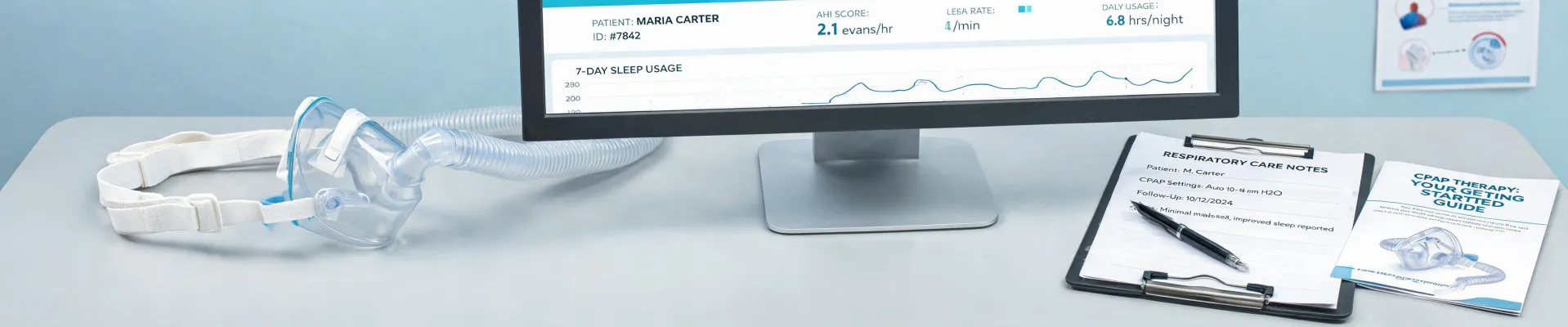
The first device we tackled was the ResMed backup battery system for our sleep apnea machines. In March 2024, we had a power outage in the neurology wing that took out 12 CPAP machines mid-study (this was back when the grid was having issues). We had no battery backups. We lost the night's data, scrambled to reschedule patients, and paid $4,000 in rush shipping for replacements.
Calculated the worst case: another grid failure costs $4,000 plus two weeks of disrupted schedules. Best case: we never use them and wasted the investment. The expected value said buy them, but the downside felt catastrophic.
We now keep a stock of ResMed backup batteries on every floor with a sleep lab. Cost: about $12,000 upfront. Since then, we've used them exactly twice—and each time, it saved roughly $8,000 in lost productivity and rush shipping.
“5 minutes of verification beats 5 days of correction. In our world, 15 minutes of checking a backup battery can save 2 nights of ruined sleep studies.”
Why This Model Works for Other Critical Devices
This same logic applies to other high-stakes devices. Take the endoscope in a clinical laboratory or surgical suite. A single endoscope failure can halt a surgical robot's case load for the entire day. (I should add that we have three robotic surgery suites running nearly back-to-back.) We used to rely on one primary scope and a 'quick repair' contract. That was a mistake.
In Q2 2024, a primary endoscope failed during a routine cleaning cycle. The repair estimate was 72 hours. We had to cancel 4 robotic surgeries (Source: our internal operating log). The revenue loss? Hard to quantify exactly, but the surgeon relations hit was significant.
Now, we maintain a 'hot spare' endoscope for each surgical robot. It's an extra $30,000 in inventory, but it has saved us from a single cancellation event—an event that would have cost more than the spare. (Surprise, surprise: the spare has been used three times in six months.)
The Counter-Argument: ‘But Our Budget is Tight'
I hear this constantly. 'We can't afford to double-stock critical spares, our CFO would have a heart attack.' At least, that's been my experience with smaller clinics. And I get it. I used to say the same thing.
The problem is that argument conflates cost with value. A $12,000 investment in backup batteries looks expensive until you have to explain to a patient with severe sleep apnea why their therapy was interrupted for three days. A $30,000 spare endoscope looks like a luxury until you're telling a surgical team to stand down for 48 hours.
I'm not a financial analyst, so I can't speak to your specific budget model. What I can tell you from a logistics perspective is that we structured our redundancy purchases as a 'risk mitigation fund,' not a 'supply expense.' It changed the conversation with the finance department (which, honestly, was the hardest part of the whole process).
How to Start: The 90-Minute Audit
Here's a practical starting point we use. In my role coordinating critical supplies, I now run a '90-Minute Failure Audit' for any lab or suite adopting a new high-value device. (This was a process I developed after the second endoscope failure.)
- List the top 3 failure modes. What's the most likely way this device breaks or becomes unavailable? (Battery failure? Scope damage? Software crash?)
- Calculate the 'cost of waiting.' What is the actual, quantifiable cost of a 24-hour downtime? Include revenue from procedures, staff salaries, and patient satisfaction penalties. (Per FTC guidelines, claims about 'cost savings' should be based on your own internal data.)
- Compare that to the 'cost of redundancy.' What would a backup battery, a spare scope, or a rapid replacement contract cost? If the cost of waiting is higher than the cost of redundancy in a single event, the decision is already made.
We did this for a clinical lab considering an expensive, single-point-of-failure analyzer. The cost of a 48-hour downtime was estimated at $18,000 in lost billable tests. The cost of a spare was $5,000. The decision took about 15 seconds. (Oh, and they bought the spare.)
A Note on ‘New' vs. ‘Old' Equipment
This planning is even more critical when integrating cutting-edge tech like robotic surgery systems (you might be reading this and asking 'how does robotic surgery work with respect to equipment failure?'). The answer is: it depends entirely on redundancy. Most modern systems have built-in fail-safes, but the external peripherals (scopes, cameras, software terminals) are often single-point-of-failure. (As of January 2025, at least, this remains a concern for most manufacturers I've spoken with.)
Don't assume 'new and expensive' equals 'reliable and redundant.' It usually doesn't. The fancier the robot, the more things that can break.
My Final Thought: Plan for the Failure You Hope Never Happens
In hindsight, I should have started this pivot three years earlier. But with the constant pressure of keeping equipment running, I did the best I could with available information. The shift from being a 'firefighter' to a 'fire preventer' didn't happen overnight. It happened one spreadsheet, one spare battery, and one cancelled surgery (that we now avoid) at a time.
If your strategy for critical medical devices is 'we'll cross that bridge when we come to it,' I'd strongly suggest building another bridge. And buying a backup battery for it.
Pricing is for general reference only. Actual costs vary by vendor and hospital contract terms. Verify current pricing with your suppliers. Based on internal experiences from a large US hospital network, Q3 2024–Q1 2025.

Elena Varga
Elena Varga is a medical imaging systems analyst covering CT scanners, MRI systems, ultrasound platforms, digital radiography, mammography, and ophthalmic imaging equipment. She references IEC 60601-2-44 for CT safety and essential performance while examining CTDIvol, dose-length product, spatial resolution, slice thickness, field uniformity, throughput, uptime, and DICOM interoperability. Her work helps radiology leaders, medical physicists, biomedical engineers, and procurement teams compare image quality, radiation management, workflow integration, serviceability, and lifecycle cost.