Efficiency Is the Real Competitive Advantage in Medical Equipment Procurement
· Elena Varga
If you're buying medical equipment on sticker price, you aren't saving money. You're just choosing where to lose it.
I coordinate time-critical medical equipment logistics. In the last decade, I've handled maybe 200 rush orders. Maybe 180 — I'd have to check the system. Same-day turnarounds for hospitals, overnight shipments of replacement devices, emergency backup units for sleep centers. The pattern I keep seeing is this: the cheapest quote is rarely the least expensive order. That's not a slogan. It's an operational reality. The real cost of any medical device is the cost of it not working when you need it. Efficiency — speed, reliability, workflow — is the competitive advantage. Most buyers focus on unit price and completely miss downtime cost.
When I'm triaging a rush order, I ask three questions in order: how many hours do we actually have, what can feasibly be done in that window, and what's the worst case if we miss it. Price almost never makes the top three. That's not because I don't care about cost. It's because time is the one variable you can't buy back after the deadline passes.
The Real Price Is Time
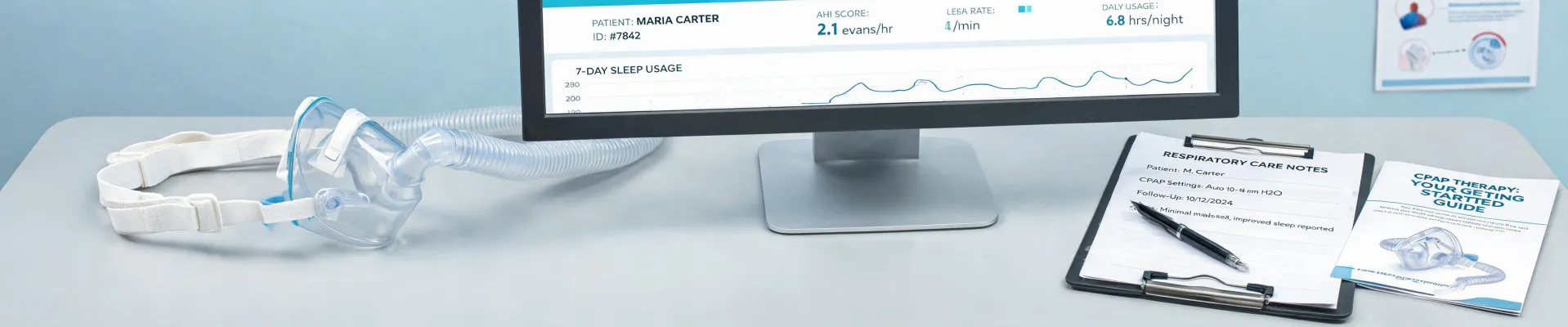
In March 2024, a sleep clinic called me at 2:45 on a Thursday. Their power had flickered overnight, and the backup systems on two CPAP units didn't come back online. They had patients scheduled Friday afternoon. The cheapest replacement power supply I found was about $85 and would arrive Tuesday. A first-party ResMed backup battery option was more expensive — honestly, I don't remember the exact spread. I want to say $250 versus $150, but don't quote me on that. What mattered was that the distributor guaranteed next-day delivery. We paid a $55 rush fee, and the clinic was up before the first appointment.
That's the thing about backup batteries. They seem like accessories until the power goes out. Then they're the therapy continuation plan. I've seen a ton of procurement lists where the backup battery is the first thing cut. But if a patient's CPAP stops working because the facility can't run itself, the cost of that missed therapy is way higher than the cost of the battery. Per FTC advertising guidance (ftc.gov/business-guidance/advertising-marketing), claims like "8-hour runtime" need to be substantiated. I'd rather buy from a manufacturer that can provide that data than from a generic listing that can't.
The ResMed ApneaLink Air Price Question
The question I hear most about the ResMed ApneaLink Air price is "why does it cost more than a home sleep test from a company nobody's heard of?" I think that's the wrong question. The right question is "how many patients can I assess per week without re-tests?" The ApneaLink Air is a screening device, but the value isn't just the hardware. It's the workflow around it. When a device integrates with your clinic's reporting process and produces clean, interpretable results, it saves technical staff hours. The price is less important than the process it eliminates.
Let's put some rough math on it. If you run 20 home sleep tests a month, a first-time success rate of 90% versus 75% means the difference between 18 completed studies and 15. Three re-tests doesn't sound like a lot, but each one uses scheduling time, device turnaround time, and tech review time. Before long, you've eaten the price difference. At least, that's been my experience with sleep centers that track their own data.
I'm not saying every sleep center should buy the most expensive option. I'm saying the calculation should be based on cost per completed study, not cost per device. The ResMed ApneaLink Air price starts to make sense when you factor in fewer failed downloads, fewer repeat tests, and less time spent chasing bad data. If you're only comparing invoices, you're missing the operational picture.
Surgical Energy, Wound Care, and Centrifuges: Same Rule
The same logic drives my recommendations for a surgical energy device. You aren't just buying a generator. You're buying the service response, the training, and the disposables pipeline. If the generator fails during a procedure, a cheaper price won't make the OR available again.
Wound care products are a little different because they're consumables. But they're not all equal. When a burn unit needs a specific dressing, the supplier that can deliver it tomorrow is worth more than one that saves you 12% and shows up in six days.
And the centrifuge thing? I still get calls from labs asking how does a centrifuge work when theirs breaks down at the worst moment. The short answer is that it spins samples at high speed so denser components separate to the bottom. The more useful answer is: do you have a service plan that gets it fixed before your samples degrade? That's efficiency. It's the same principle with medical gas, or diagnostic analyzers — time is the variable that determines whether the equipment creates value.
What About the Lowest Bid?
I know what some procurement folks are thinking. "That's easy for you to say. My budget is fixed." I get it. I've been on the side of a $15,000 contract where I tried to save $3,000 by using a discount vendor. The order arrived two days late. The client invoked the penalty clause. We lost $8,000 and almost lost the account. I assumed "same specifications" meant the same delivery timeline. Didn't verify. Turned out their "two-day shipping" meant two business days after processing, not two days from order.
That's when I implemented a policy: no vendor gets a slot unless they can document their turnaround in writing. After three failed rush orders with discount vendors, I stopped treating the lowest quote as the default. I still look for savings, but I look at total risk first. There are cheap vendors with excellent logistics; I've used them. But "cheap" and "fast" are different variables. You have to know both before you decide.
Honestly, I'm not sure why some vendors consistently miss their quoted timelines while others don't. My best guess is internal buffer practices: the reliable ones build in slack, while the optimistic ones quote the best-case date. At least, that's been my experience with time-critical medical equipment.
Bottom Line
So here's my opinion, stated plainly. Efficiency isn't a nice-to-have. It's the metric that determines whether a device actually provides value. The ResMed backup battery is worth considering because it keeps therapy running when the power doesn't. The ResMed ApneaLink Air price is justified by the workflow it supports. The same test applies to surgical energy devices, wound care products, and centrifuge service. It's not about logos. It's about whether the product fits into an efficient process.
Plus, the industry is moving this way. Cloud-based diagnostics, automated reordering, remote monitoring — they all push decision-making toward speed and reliability. The centers that embrace efficient workflows will have lower cost-per-patient and fewer emergencies. The ones that don't will keep paying rush fees.
So the next time you're comparing options, ask the boring questions. What happens when this doesn't arrive on time? Who answers the phone at 4 p.m. on a Friday? What does the full workflow look like, not just the sticker price? Buy the process, not just the product. That's how you make a real purchasing decision.

Elena Varga
Elena Varga is a medical imaging systems analyst covering CT scanners, MRI systems, ultrasound platforms, digital radiography, mammography, and ophthalmic imaging equipment. She references IEC 60601-2-44 for CT safety and essential performance while examining CTDIvol, dose-length product, spatial resolution, slice thickness, field uniformity, throughput, uptime, and DICOM interoperability. Her work helps radiology leaders, medical physicists, biomedical engineers, and procurement teams compare image quality, radiation management, workflow integration, serviceability, and lifecycle cost.