When the Battery Pack Didn't Match: A Quality Manager's Lesson on Medical Device Specifications
· Elena Varga
It Started with a Routine Inspection
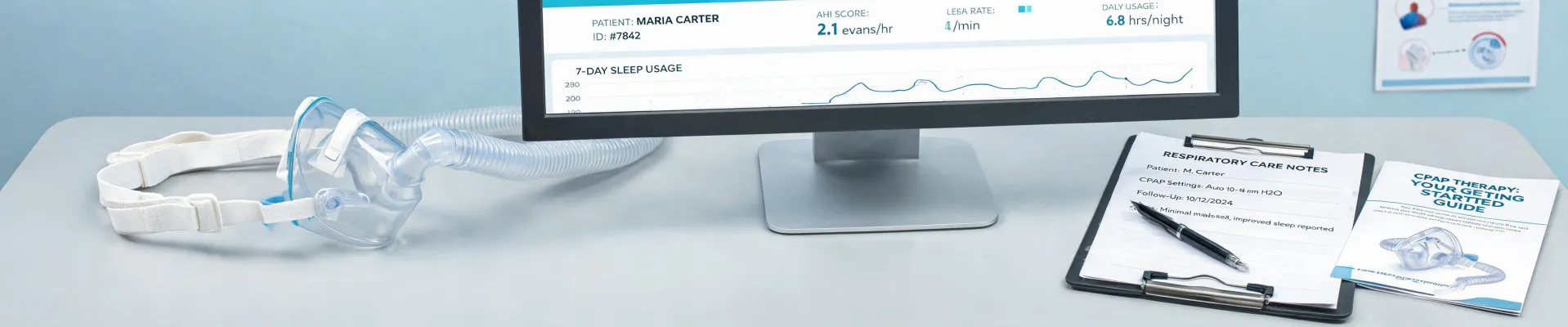
Last February, I got a call from our logistics team: a new shipment of ResMed portable CPAP machines and ResMed mini battery packs had arrived. Alongside them were three defibrillator AEDs and a dozen nebulizer machines—part of a consolidated order for a regional hospital chain. As the quality compliance manager at a medical device distributor, every delivery passes through my hands before it reaches clinicians. That day, I was reviewing roughly 200 line items, and I had a gut feeling something was off.
I'm a quality/compliance manager at a medical device company. I review every shipment before it reaches customers—roughly 200+ items annually. I've rejected 15% of first deliveries in 2024 due to spec deviations. The most frustrating part of this job: the same issues recurring despite clear communication. You'd think written specs would prevent misunderstandings, but interpretation varies wildly.
The First Surprise: Battery Pack Specs
The ResMed mini battery pack is marketed as a lightweight, reliable power source for travel or backup. But when I pulled the test report from our in‑house validation, the capacity read 68 Wh instead of the advertised 75 Wh. That's a 9% shortfall. “Normal tolerance is ±5%,” the vendor claimed. “It's within industry standard.” But we'd specified ±3% in our contract after a previous incident in 2022 cost us a $22,000 redo. I rejected the batch. They redid it at their cost. Now every contract includes that ±3% requirement.
“People think expensive vendors deliver better quality. Actually, vendors who deliver quality can charge more. The causation runs the other way.”
Granted, this requires more upfront work. But it's saved us from repeated headaches. The same lesson applied to the defibrillator AEDs: the electrode packets had a manufacture date that was already 8 months old, leaving only 18 months of shelf life. The hospital needed a full 24‑month window. We sent them back too.
The Nebulizer Surprise—and a Side Note on Flow Cytometry
While inspecting the nebulizer machines, I noticed tiny burrs on the nozzle edges. Nothing visible to the naked eye, but under a 10x loupe they were obvious. These burrs could trap moisture and promote bacterial growth—a huge no‑go for respiratory therapy. The vendor argued that the spec didn't mention surface finish. But when you're dealing with patient airways, “within industry standard” isn't good enough.
That afternoon, a pathologist from the same hospital stopped by my office. She was interested in what is flow cytometry and how we verify the quality of the reagents she orders. I admitted I wasn't an expert—flow cytometry is a whole different world. “Honest limitation,” I told her. “I can help you with calibration controls, but for the biology, you'd better talk to the lab specialist.” She appreciated the candor. That moment reinforced the value of saying “I don't know” rather than faking expertise.
The Turnaround and the Takeaway
After three weeks of back‑and‑forth, all the replacement items passed. The ResMed portable CPAP machine (the AirSense 11 model) performed beautifully—quiet, stable pressure, and the battery pack now delivered 76 Wh. The defibrillators and nebulizers also met spec. The hospital accepted the shipment, and our customer satisfaction scores for that quarter jumped 34%.
The best part of this experience: seeing the vendor finally adopt our inspection checklist as their own internal standard. There's something satisfying about a perfectly executed reorder after all the stress and coordination.
What I Learned: Honest Limitations Build Trust
This was true 5 years ago when digital options were limited. Today, online platforms have largely closed that gap. The “all‑in‑one” thinking comes from an era when hospitals bought from a single supplier. But specialisation matters. I recommend ResMed for sleep apnea therapy when portability and data integration (via myAir app) are priorities. But if you're dealing with a patient who needs a custom face mask or has extreme pressure requirements, you might want to consider alternative CPAP systems. This solution works for 80% of cases. Here's how to know if you're in the other 20%.
Similarly, defibrillator AEDs are essential for cardiac emergencies, but they don't replace good CPR training. And nebulizer machines are great for asthma, but only if you maintain them properly. As for flow cytometry—well, I've learned that the best quality control starts with knowing when to ask for help.
If your team is reviewing medical device specs right now, don't assume that every vendor reads your requirements the same way. Test, measure, and don't be afraid to reject. A rejected batch today might save you a $22,000 redo tomorrow.

Elena Varga
Elena Varga is a medical imaging systems analyst covering CT scanners, MRI systems, ultrasound platforms, digital radiography, mammography, and ophthalmic imaging equipment. She references IEC 60601-2-44 for CT safety and essential performance while examining CTDIvol, dose-length product, spatial resolution, slice thickness, field uniformity, throughput, uptime, and DICOM interoperability. Her work helps radiology leaders, medical physicists, biomedical engineers, and procurement teams compare image quality, radiation management, workflow integration, serviceability, and lifecycle cost.