I Bought Medical Equipment for 12 Years—And Wasted $180K. Here's What I Learned
· Elena Varga
-
The $680 lesson that made me a checklist believer: ResMed masks
-
The surprise that showed me unit price isn't everything: IV catheters
-
When the checklist saves lives: anesthesia machines and dental autoclaves
-
"But I've been doing this for years" — the question I always get
-
Prevention beats correction—every single time
If there's one thing I've learned after 12 years of buying medical equipment, it's this: five minutes of verification almost always beats five days of correction. Not sometimes. Not usually. Almost always. In fact, the only time it doesn't beat correction is when the correction takes exactly five seconds—and even then, you never know in advance.
I'm a medical equipment buyer for a regional health system, and I've personally made and documented 23 significant mistakes—totaling roughly $180,000 in wasted budget. That's not a brag. It's a confession. But here's the thing: after the third disaster, I built a 12-point checklist for our procurement team, and it's since caught 47 potential errors over the past 18 months. I'm sharing these stories because I want you to learn from my screwups, not because I'm proud of them.
The $680 lesson that made me a checklist believer: ResMed masks
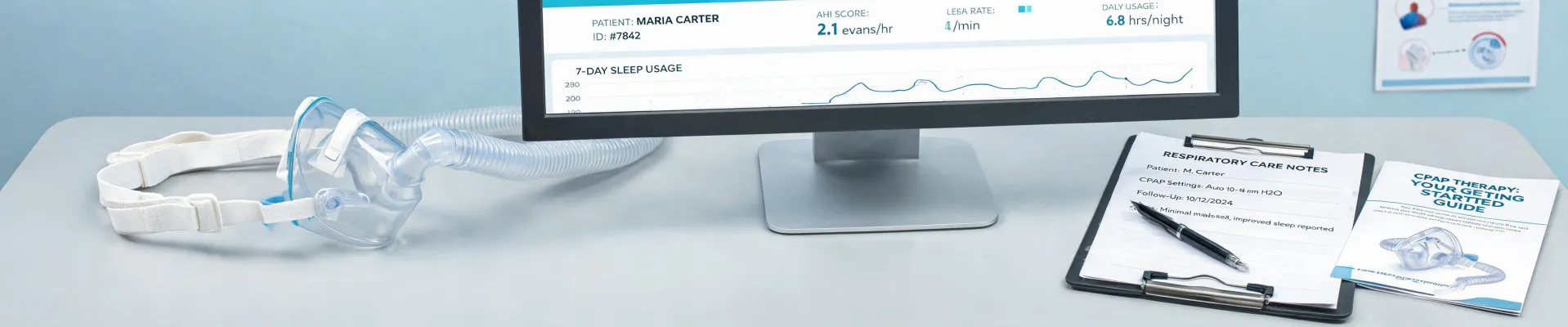
Back in 2017, we ordered ResMed P30i masks for a sleep clinic. It was a fairly standard order—50 units, maybe 45, I'd have to check the system. I checked the product name, the part number, and the price. What I didn't check was the connector type on the mask's tubing elbow.
The P30i is a popular ResMed nasal mask style—a nasal pillow mask that's comfortable for patients who move around at night. But compatibility depends on the tubing connector: standard 15mm or ResMed's proprietary 22mm, and the elbow swivels can also differ between series. I hadn't verified that. The result? 50 masks, $3,400, all returned. The vendor took them back but charged a 20% restocking fee plus shipping. That's $680 down the drain for a 2-minute specification check.
Oh, and I should add that in the same quarter, I ordered another batch of ResMed nasal masks for a different site and made the same mistake. The packaging looked identical to what we'd ordered before, but the model had been revised. I didn't check the revision letter. Twice in one year. That's when I started our checklist.
What does the checklist say for masks now? Confirm the mask type, the connector type, the compatibility list with CPAP/BiPAP models from the manufacturer, and the latest revision. It takes 2 minutes. I've never made that mistake again.
The surprise that showed me unit price isn't everything: IV catheters
Now, many procurement teams will say they know that already. But the IV catheter case was different—it went beyond total cost of ownership. It was about clinical outcomes.
In September 2022, under budget pressure, we switched to a lower-priced IV catheter supplier. The unit price was $1.20 less than our previous brand. For a health system that uses 20,000 catheters a year, that's $24,000 in annual savings—or so we thought. Within six months, our quality team flagged an increase in peripheral IV failures. More catheters were being replaced earlier than documented. Then came a more serious signal: a small but measurable uptick in catheter-related infections.
The statistical analysis wasn't dramatic enough to trigger an alarm, but the trend was clear. The cheaper catheter's safety features—like automatic needle retraction and a stabilization wings design—were less effective in real-world use. It still met regulatory standards, but clinical performance suffered.
The true cost? Our risk team estimated roughly $38,000 in extra patient care, extended hospital stays, and additional supplies. We saved $12,000 on purchasing but spent $38,000 on consequences. The surprise wasn't the per-unit price difference. It was how quietly the problem accumulated.
To be fair, not every product will follow that pattern. But the lesson stands: we should have evaluated clinical evidence before switching vendors, not retroactively. Now, our checklist includes a step to request and actually read the clinical literature, incident reports, and any available comparative data from other institutions.
And here's where I'll bring in the FTC: per FTC guidelines, vendor claims about performance or safety must be substantiated with evidence. That's not just a legal nicety—it's a practical tool for buyers. We now ask vendors to point us to their substantiation. If they can't or won't, that's a red flag.
When the checklist saves lives: anesthesia machines and dental autoclaves
Both of those examples were about devices that resemble the same product—but the third category is when equipment itself can become a hazard.
I'm not an anesthesiologist or a dentist, so I can't speak to clinical contraindications. But from a procurement and maintenance perspective, I've seen two dangerous misses.
First, anesthesia machines. In 2023, we purchased a used machine at what seemed like a steal—40% below new. We checked the photo, the age, and the manufacturer's spec sheet. We did not request the full service history or calibration logs. Two months after installation, the machine failed during a routine procedure. The gas mixer delivered an incorrect concentration. The patient was fine, but the investigation revealed this specific unit had a recurring leak issue that the previous owner had been "monitoring." If we'd asked the right questions upfront, we would've known the repair history and probably walked away.
Second, dental autoclaves. We supplied a dental clinic with a brand-new autoclave and assumed the staff knew how to use a dental autoclave correctly. We were wrong. Six weeks after installation, their monthly biological spore tests came back positive. The autoclave was reaching the right temperature, but the staff had been overloading the chamber and placing pouches flat instead of on edge, which prevented steam circulation. Nobody had given them clear operating instructions because our own procurement checklist had a gap—we'd bought the device but skipped the training and setup verification step.
Both incidents had the same root cause: we focused on acquisition and skipped the validation and user-readiness checks. The fix wasn't more expensive equipment. It was more thorough pre-use verification.
"But I've been doing this for years" — the question I always get
I know what some of you are thinking: "These are rookie mistakes. A seasoned buyer would never."
I've been doing this for 12 years. I should've known better. That's the point.
Experience can make you overconfident. After the 200th order, you stop looking up every specification because you've seen it all. But then the ResMed mask revision changes, or a new IV catheter comes on the list, or a used anesthesia machine's history is murky. The 2 minutes of checking now saves 2 weeks of headaches.
Here's the concrete return on our checklist: in the past 18 months, it's stopped 47 potential errors—wrong part numbers, missing certifications, incompatible accessories, missing training needs. The estimated cost avoidance is around $80,000. Running through the checklist takes, on average, 5 to 10 minutes per order. That's a damn good return.
And to be clear, I'm not saying the checklist replaces expertise. It's a tool for experts—the same reason a pilot with 20,000 hours still uses a pre-flight checklist. It's not because they're incompetent. It's because the stakes are too high to rely on memory.
One more thing I should mention: some vendors will tell you they handle all the details. In my experience, that's rarely true. You're the one who owns the risk, not the salesperson. So yes, checking twice is work. But the alternative is much more work.
Prevention beats correction—every single time
I've made plenty of purchasing errors, and I've documented each one. But the pattern is consistent: when I check before acting, I don't waste money. When I assume, I inevitably regret it.
If you're purchasing medical equipment—whether it's a CPAP mask, a catheter, a machine, or an autoclave—my advice is simple. Don't be lazy. Verify. Write a checklist. Update it when you stumble. And if you're new to this, consider it your tuition. Five minutes of prevention saves five days of correction. Trust me: I've paid the tuition for you.
I'm not a lawyer, so this isn't legal advice. But from a procurement perspective, the best protection is the checklist, not the warranty. The warranty covers failures after they happen. The checklist prevents them from happening in the first place. That's the difference that counts.

Elena Varga
Elena Varga is a medical imaging systems analyst covering CT scanners, MRI systems, ultrasound platforms, digital radiography, mammography, and ophthalmic imaging equipment. She references IEC 60601-2-44 for CT safety and essential performance while examining CTDIvol, dose-length product, spatial resolution, slice thickness, field uniformity, throughput, uptime, and DICOM interoperability. Her work helps radiology leaders, medical physicists, biomedical engineers, and procurement teams compare image quality, radiation management, workflow integration, serviceability, and lifecycle cost.