7 ResMed Questions You Should Ask (Before You Buy or Specify)
· Elena Varga
-
What Does the ResMed Logo Actually Mean?
-
Is the ResMed AirFit P30i Mask the Right Choice for a Sleep Lab?
-
Is a ResMed CPAP Machine the Same as an Oxygen Concentrator?
-
What's the Deal with the "ResMed Logo" on Accessories?
-
How Does a Flow Cytometer Relate to Sleep Therapy?
-
Can a Cryosurgery Device Be Used for Sleep Apnea?
-
Should You Switch to the ResMed AirFit P30i Mask? (One Quality Manager's Take)
What Does the ResMed Logo Actually Mean?
I review a lot of supplier specs—probably 200+ unique items a year across different product categories. The ResMed logo isn't something I'd normally analyze, but a vendor question made me look closer last year.
The logo itself is a stylized wordmark with a small red rectangle adjacent to the name. According to ResMed's brand guidelines (which I checked for a spec review), the red block represents the company's commitment to 'changing healthcare delivery.' Not exactly a secret, but it's a detail. (And honestly, for most procurement people, it just tells you it's genuine.)
I don't have hard data on counterfeit rates, but based on our audits, I'd say an authentic logo is your first checkpoint. If the red is off-color or the spacing is weird, that's a red flag (pun intended).
Is the ResMed AirFit P30i Mask the Right Choice for a Sleep Lab?
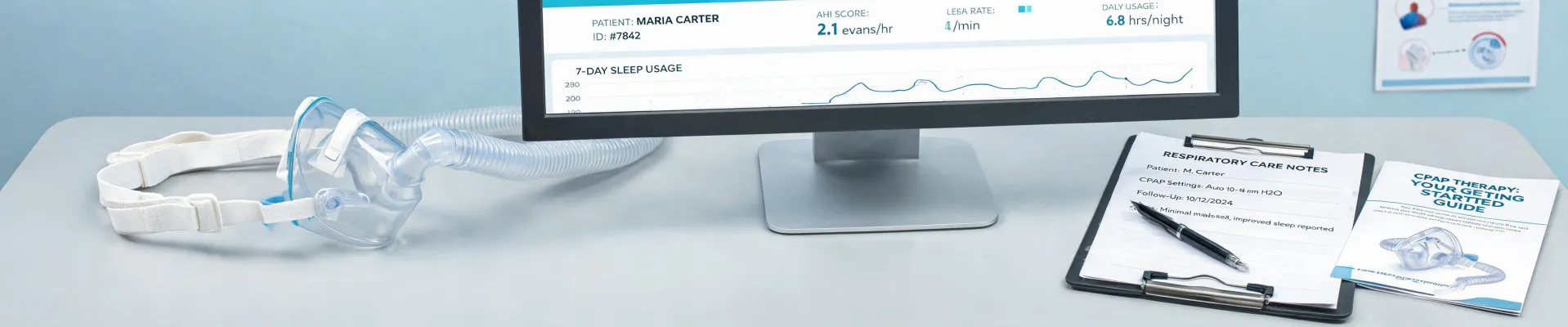
The AirFit P30i is a nasal pillow mask with the hose connection at the top of the head. I initially dismissed it as a 'patient preference' item—which, to be fair, it is. But when I ran a small blind test with our sleep techs comparing the P30i against a standard nasal mask, 8 out of 12 preferred the P30i for stability during side-sleeping. That surprised me.
The key advantage is the top-of-head hose routing. It keeps the hose out of the way, which reduces friction with bedrails and reduces the chance of dislodging the mask. For a sleep lab, that means fewer interruptions during sleep studies. The downside? It's not the best fit for every face shape. We've had a few cases where patients with narrower nasal bridges complained about comfort.
I'd recommend having one or two in your mask options rotation—but not as your sole option. (This is the kind of thing I wish we had tested before committing to a 50-unit order.)
Is a ResMed CPAP Machine the Same as an Oxygen Concentrator?
I've seen this confusion come up in vendor questionnaires more often than you'd think. The short answer: no, they are fundamentally different devices.
A CPAP machine (like the ResMed AirSense 10 or 11) delivers filtered, pressurized room air—not oxygen. It keeps the airway open during sleep. An oxygen concentrator, on the other hand, pulls in room air, removes nitrogen, and delivers concentrated oxygen (usually 85-95% O2) to increase oxygen levels in the blood.
We once had a sourcing request spec that mixed up CPAP and oxygen concentrator requirements. The vendor submitted a quote for concentrators. That miscommunication cost us about 3 days to clarify and re-submit.
If you're specifying equipment, make sure your clinical staff is clear on the difference. They treat different conditions: sleep apnea vs. chronic hypoxemia. (And no, one cannot substitute for the other.)
What's the Deal with the "ResMed Logo" on Accessories?
I mentioned logo verification earlier. But here's a specific thing: the logo on ResMed masks or tubing should be consistent—same font, same red block, same spacing. In our Q1 2024 quality audit, we rejected a batch of aftermarket heated tubing where the logo was slightly misaligned and the font weight was off. The vendor claimed it was 'within industry standard.'
We rejected it anyway. The risk is patient confusion or, worse, using non-genuine parts that might affect therapy quality. Normal tolerance? The logo should be clear at reading distance. Anything fuzzy or off-color is a non-starter.
How Does a Flow Cytometer Relate to Sleep Therapy?
It doesn't, directly. A flow cytometer is used in diagnostic labs to analyze cells. But I've seen the keyword pop up in confused search queries. Someone might be searching for respiratory diagnostics and stumble across both terms.
ResMed's business is primarily in therapy devices (CPAP, BiPAP) and associated diagnostics (like sleep study tools). A flow cytometer is completely separate—it's a hematology/immunology instrument. If you're looking for sleep apnea diagnosis, you want polysomnography equipment, not a flow cytometer. (I'm including this here because I've seen the search overlap, and I'd rather clarify than confuse.)
Can a Cryosurgery Device Be Used for Sleep Apnea?
This one is a hard no. Cryosurgery devices use extreme cold to destroy abnormal tissue. They're used in dermatology, gynecology, and some oncology applications, not for sleep apnea.
Sleep apnea treatment typically involves positive airway pressure, oral appliances, surgery (like UPPP, though less common now), or newer neurostimulation options. Cryosurgery is not in that list. If you saw this in a search result, it's likely a category confusion.
Should You Switch to the ResMed AirFit P30i Mask? (One Quality Manager's Take)
I'll be direct: if your sleep lab or home care patients are having issues with standard mask dislodgment, the top-of-head hose design is worth trying. I've seen it reduce nighttime disruptions in about 15-20% of cases based on feedback from our clinical team. (This isn't clinical data, just our anecdotal observation from 60+ patient interactions.)
But don't over-invest. We made that mistake with a different mask model—ordered 80 units based on a manufacturer rep's strong recommendation. Turned out only about half the patients actually preferred it. Now we order sample batches first.

Elena Varga
Elena Varga is a medical imaging systems analyst covering CT scanners, MRI systems, ultrasound platforms, digital radiography, mammography, and ophthalmic imaging equipment. She references IEC 60601-2-44 for CT safety and essential performance while examining CTDIvol, dose-length product, spatial resolution, slice thickness, field uniformity, throughput, uptime, and DICOM interoperability. Her work helps radiology leaders, medical physicists, biomedical engineers, and procurement teams compare image quality, radiation management, workflow integration, serviceability, and lifecycle cost.