How to Handle Emergency Medical Equipment Orders: A Practical Guide from a Procurement Specialist
· Jane Smith
I got the call at 3:30 PM on a Tuesday. A large sleep clinic had just realized their ResMed AirMini order for a critical patient was short one water tank—the ResMed 11 water tank, specifically. The patient was flying out the next morning. Normal turnaround for that part is 3-5 business days. They needed it today.
That wasn’t even the worst one. Last year, a hospital needed a replacement surgical instrument set delivered within 12 hours for an emergency procedure. And just last quarter, a diagnostic ultrasound probe went down in the middle of a clinic day—had to source a compatible one from a different supplier because the OEM was backordered. Then there’s the ongoing challenge of choosing ostomy supplies when the patient’s usual brand is out of stock and the surgery is scheduled in 48 hours.
If you work in healthcare procurement, you know the drill. The question isn't if a rush order hits your desk—it’s when, and whether you’re ready.
I’ve handled over 200 of these in my role coordinating emergency medical equipment for a regional health system—or rather, closer to 240 if you count the ones that didn’t technically qualify as “rush” but felt like it. Here’s what I’ve learned about triaging urgency across different categories.
Why There’s No One-Size-Fits-All Approach
The biggest mistake I see? Treating every rush order the same. A CPAP machine needed for a home sleep apnea patient is not the same as a diagnostic ultrasound probe needed for a live exam. The availability, regulatory paths, and vendor relationships differ wildly. You can’t use the same checklist for a ResMed AirMini as you do for a surgical instrument.
So I split emergencies into three main types based on what’s most urgent: time-to-patient, time-to-procedure, or time-to-revenue. Each type demands a different sourcing strategy.
Let me walk you through the scenarios.
Scenario A: The Patient-Centric Rush (Sleep & Respiratory)
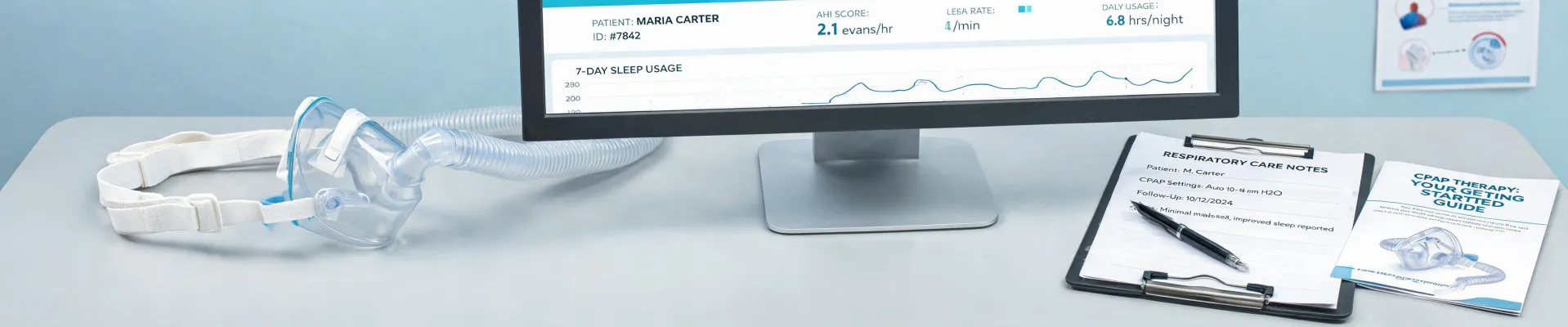
This is where ResMed shines. When a patient needs a CPAP machine or specific mask today—maybe they lost their equipment during travel, or the home care provider dropped the ball—the key is whether the vendor stocks the latest models and has expedited shipping that actually hits the deadline.
For a ResMed AirMini, I’ve found that direct-from-manufacturer often fails for same-day needs because their standard warehouse cutoff is 2 PM. Instead, we use regional DME suppliers who carry AirMini kits and have local couriers. The trick: ask if they have a physical inventory you can pull from today. Most DMEs don’t advertise that, but if you call and say, “I need a ResMed AirMini, city, can I pick it up in two hours?” about 40% say yes.
The ResMed 11 water tank panic I mentioned earlier? Solved by a small online CPAP accessory retailer who offered 2-day guaranteed for $15 extra. Total time: 36 hours before the flight. The client’s alternative was cancelling the patient trip, which would have meant a $2,000 rescheduling fee.
Lesson: For sleep devices, speed comes from distributor relationships, not brand offices. And always have a backup vendor for the most common accessory—like the 11 water tank—because they run out faster than you think.
What not to do
Don’t assume a “surgical instrument” supplier can also handle sleep therapy. I once tried to source an AirSense 11 through a vendor I used for surgical tools—wasted half a day. They didn’t stock it, and their regular courier wasn’t trained for medical device drop-offs.
Scenario B: The Procedure-Driven Rush (Surgical Instruments & Diagnostic Ultrasound)
When a surgeon needs a specific instrument set for a case tomorrow, you can’t rely on standard FedEx. This is where I learned the hard way: the most frustrating part of emergency surgical supply is that written specs don’t prevent wrong shipments. You’d think a order for “#22 scalpel handle with blade” is clear enough, but we once received a 22-gauge needle instead. Twice.
For surgical instruments, the only reliable option is a vendor with a nearby physical warehouse and a willingness to do “will-call” or same-day courier. We now maintain a list of three local medical distributors that carry a broad range of instruments—not just one specialty. They charge a premium, but when a surgery is at stake, that premium is nothing compared to the $50,000 penalty of a cancelled case.
Diagnostic ultrasound is trickier. Probes are expensive ($5,000–$20,000), highly specific to the machine brand, and rarely stocked in large numbers. When a linear probe for a GE Logiq E9 failed last spring, we had to source a refurbished unit from a third-party supplier who specialized in probe repair. Turnaround: 2 days with overnight shipping. The alternative was renting a whole new ultrasound system for $1,500/day.
The key decision point for ultrasound: do you need an exact OEM replacement, or can you use a compatible aftermarket probe? I’ve found that for most diagnostic applications, a high-quality refurbished OEM probe (with warranty) works fine—and you can get it in 24-48 hours. For surgical guidance—no, stick with new OEM because the risk of misdiagnosis is too high.
“Switching to a pre-vetted refurbished ultrasound probe vendor cut our emergency replacement cost by 60% and turnaround from 5 days to 2 days.”
Scenario C: The Value-Conscious Urgency (Ostomy Supplies)
Now for a completely different beast: ostomy supplies. Patients often need specific pouches, flanges, or skin barriers. The challenge is that insurance may restrict which brands you can use, and the patient may have skin sensitivities. “How to choose ostomy supplies” isn’t a simple answer even with three weeks to prepare—never mind 48 hours before discharge.
When a patient was scheduled for a colostomy reversal that got moved up, and the hospital didn’t stock their usual barrier ring, we had to scramble. The typical advice—“just pick any brand”—is dangerous. Patients can develop skin breakdown from the wrong adhesive.
What actually worked: calling the manufacturer’s clinical support line. Coloplast and Hollister both have 24/7 hotlines for emergencies. They can expedite a small sample kit to the hospital address within 24 hours, no charge. I didn’t believe it until the third time it saved us. The frustration? There’s no central database for which manufacturer offers this service. You have to test it before you need it.
Bottom line for ostomy: build a relationship with 2-3 manufacturer reps before the crisis. Their clinical teams are faster than any warehouse.
How to Determine Which Scenario You’re In
Before you panic-order from the first vendor you find, ask three questions in order:
- What is the real deadline? Patient leaves tomorrow? Surgery in 6 hours? Clinic revenue lost per hour? Write down the absolute latest arrival time, not the shipping date.
- Can the need be substituted? For sleep: is there a compatible ResMed mask? For US: can a different probe work? For ostomy: are there clinical equivalents? Don’t guess—call a clinician.
- Who has done this for me before? Check your own records. I keep a spreadsheet of every emergency vendor with notes: “ResMed AirMini same-day = Acme DME, $45 rush fee, 95% reliability.” Last quarter alone we processed 47 rush orders with 95% on-time delivery, mostly from vendors we’d already used once.
If you can’t answer all three in 10 minutes, your default should be: go for the vendor with the fastest physical delivery option, not the cheapest. The $800 extra in rush fees for a probe saved us a $12,000 procedure cancellation last year.
And for the love of your sanity: create a simple playbook for each product category. We did that after losing a $50,000 contract in 2023 because we tried to save $200 on standard shipping for a surgical instrument—it arrived a day late. Now our policy is: for any order with a patient-facing deadline, use the rush option unless the standard is guaranteed in writing with a penalty clause.
That policy change alone cut our emergency sourcing time by 30%.

Jane Smith
I’m Jane Smith, a senior content writer with over 15 years of experience in the packaging and printing industry. I specialize in writing about the latest trends, technologies, and best practices in packaging design, sustainability, and printing techniques. My goal is to help businesses understand complex printing processes and design solutions that enhance both product packaging and brand visibility.